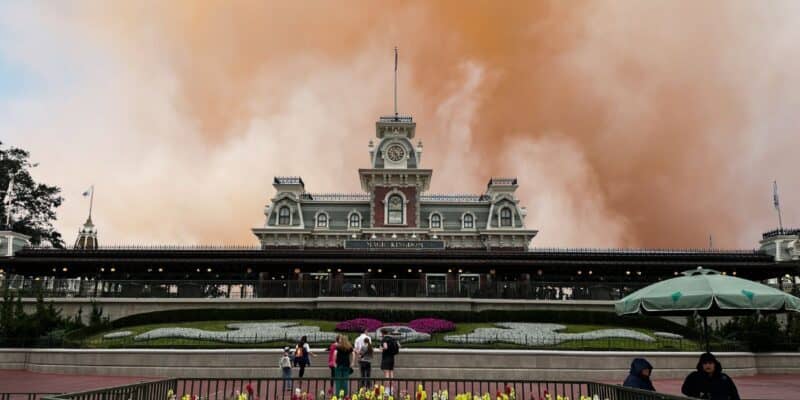
 Credit: Inside The Magic
Something big is heading towards Disney World, which may disrupt Fall 2026 vacation plans.
Here’s what you need to know about what’s arriving in ten days.

Disney World to Be Hit With Major Inclement Event in 10 Days
A Walt Disney World vacation already asks guests to plan around heat, thunderstorms, dining reservations, and an app full of attraction times. Another atmospheric complication is now moving into the picture—but its likely effect is less dramatic than a closed park gate.
Southwest Florida meteorologist Matt Devitt said on August 10 that additional Saharan dust would move across the Gulf Coast, including Florida, during the following five to 10 days. He forecast generally light-to-moderate concentrations with a few heavier pockets.
For Disney World guests, the practical concerns are hazy skies, possible air-quality changes, and fewer cooling afternoon storms—not confirmed ride closures or delayed park openings. Walt Disney World has announced no operating-hour changes connected to this plume.
That distinction matters. Saharan dust can influence a park day, particularly for someone with asthma or another lung condition. But the forecast does not establish that it will interrupt attraction operations or broadly disrupt fall vacations.

What the Saharan Dust Forecast Means for Disney World
The Saharan Air Layer is a mass of warm, dry, dusty air that forms over the Sahara Desert and travels west across the Atlantic. According to NOAA’s explanation of the phenomenon, outbreaks normally intensify in June, peak from late June through mid-August, and subside rapidly afterward.
That makes the current timing unsurprising. NOAA says new outbreaks can emerge every three to five days during peak season and travel as far west as Florida and Texas.
Devitt said Florida’s Saharan dust season should gradually decline during September and October. His immediate forecast, however, covers five to 10 days. It should not be interpreted as evidence that Walt Disney World faces continuous dust-related disruption throughout the fall.
Guests could see a milkier sky, reduced long-distance visibility, and deeper orange or red colors around sunrise and sunset. Disney photographers may find the haze visually striking around Cinderella Castle or World Showcase Lagoon, although conditions will differ by day and location.
Inside the Magic previously examined what Saharan dust actually changes at Disney World, including the important point that dust alone is not expected to shut the parks or suddenly close outdoor rides.

Ride Closures Are Not Currently Part of the Forecast
Disney acknowledges that experiences may be delayed, rescheduled, or canceled during severe weather. Lightning, high winds, and intense storms can temporarily remove outdoor attractions and entertainment from the schedule.
Saharan dust is different.
NOAA says the Saharan Air Layer’s warmth and dryness can stabilize the atmosphere and suppress cloud or thunderstorm formation. Depending on the surrounding weather pattern, that could mean fewer of Central Florida’s familiar afternoon showers—not an increased likelihood of lightning closures caused directly by the dust.
Recent Disney World attraction interruptions documented by Inside the Magic involved severe thunderstorms and lightning, not merely airborne Saharan dust. Likewise, the resort’s previous weather-related operational cuts occurred when active storms affected outdoor experiences.
No official source currently indicates that the approaching plume will delay park openings, close rides, or alter Mickey’s Not-So-Scary Halloween Party dates.

The Bigger Concern Is a Long Outdoor Day
The less cinematic consequence may be the one guests notice most.
When dry air reduces afternoon thunderstorm coverage, visitors can lose the brief cloud cover and temperature relief that sometimes interrupts a humid Central Florida afternoon. NOAA notes that some locations experience their hottest days when Saharan air suppresses storms.
That pattern contributed to concerns during July’s extreme heat at Disney World. Still, dust does not automatically produce dangerous heat, and guests should rely on current National Weather Service advisories rather than assuming every hazy day carries the same risk.
Air quality also deserves attention. NOAA advises people with asthma and chronic lung diseases to keep their conditions controlled and limit outdoor exposure when dust becomes concentrated near the surface. Actual risk depends on local particulate levels, which can be checked through AirNow’s Florida air-quality map.
Guests should pack prescribed medication, take air-conditioned breaks, drink water consistently, and avoid treating a full day outdoors as an endurance test. Indoor attractions make useful afternoon backups when conditions become uncomfortable.

What Disney World Guests Should Monitor
This is a developing forecast, not a confirmed Disney operational disruption.
Before leaving a resort hotel, guests should check local weather advisories and AirNow rather than relying solely on a regional dust map. Inside the parks, the My Disney Experience app remains the most useful source for live attraction availability.
Disney visitors can also review strategies for handling rain and weather changes and the resort’s newer Disney Weather Check tools.
The approaching dust may tint the sky and make some guests rethink a long afternoon in direct sun. What it has not done—at least based on the evidence available August 11—is place Disney World rides, opening times, or fall vacations on a confirmed path toward disruption.