Credit: Michael Gray, Flickr
Disney just filed a new patent that will be designed to calculate all of your fears and pump out warnings that will be tailored to you based on what ride you are looking to get on with your family and friends.
Disney Will Soon Pump Out Warning System for Those With Particular Ride Fears
Disney has filed a patent application describing a personalized attraction-notification system that could warn guests before specific moments they personally find frightening or uncomfortable. Published August 20, 2026, the Disney Enterprises filing describes profiles built around guest “aversions” and “preferences,” potentially allowing attraction content to be matched against an individual rider’s stated concerns.
That is a notable idea for Walt Disney World, where attraction warnings have traditionally been broad and experience-based rather than tailored to one person. But the filing is a proposal, not an announced operational change. Disney has not confirmed that Walt Disney World will deploy the system, replace physical warning signs, require every rider to create a profile, or deny boarding based on an aversion.
Disney Ride Warning Patent Centers on Individual Preferences
The filing lists Gregory Brooks Hale, Celia Gomez, and Reshmashree Bangalore Kantharaju as inventors. Its central concept is personalization: rather than giving every guest the same warning, a system could know what a particular person wants to avoid and deliver information relevant to that person before or during an attraction experience.
Walt Disney World already describes Disney Genie as providing personalized recommendations based on pre-selected preferences, while its official accessibility resources provide detailed planning information for guests who may need additional support.
Disney also publishes “Sensory Experience Details” covering effects including loud noises, darkness, high speeds, sudden movements, lighting effects, and getting wet.
The Patent Does Not Confirm Mandatory Profile Checks
The most consequential question is what this technology would look like at an actual attraction entrance. A system that checks individual preferences before boarding could create a fundamentally different interaction from reading a static warning sign.
Still, there is an important line between what the patent describes and what Disney has announced. The filing does not, by itself, establish that every guest would face a mandatory profile check before riding. It also does not confirm that a flagged fear would restrict attraction access.
That distinction matters. Disney has previously faced scrutiny over changes to its Disability Access Service, including the move toward virtual eligibility conversations. Inside the Magic has covered Disney’s updated DAS registration rules and subsequent changes extending DAS validity, both of which illustrate how consequential a new digital checkpoint can become once it affects real park access.

Static Attraction Warnings Are Not Disappearing Yet
Walt Disney World currently gives guests multiple ways to understand an attraction before boarding. Disney’s accessibility site directs visitors to planning guides and sensory information, while Guest Relations provides accessibility information and park-specific guides.
A personalized warning layer could theoretically make that information more precise. Someone concerned about darkness might not need the same notice as someone who dislikes sudden drops, loud explosions, enclosed spaces, or startling figures. Instead of forcing the guest to interpret a generalized description, software could surface the moment most relevant to the profile.
What Disney has not announced is the elimination of traditional signs. There is also no confirmed timetable for installation at Magic Kingdom, EPCOT, Disney’s Hollywood Studios, or Disney’s Animal Kingdom. Treating the patent as an imminent replacement for current warnings would go beyond the evidence available today.
The operational stakes would rise if Disney ever made the technology compulsory, but no such Walt Disney World rollout has been announced.
Disney Already Uses Personalized Conversations for Some Access Needs
The concept arrives while Disney continues refining how guests navigate attraction access. Walt Disney World’s official queue-access guidance says guests with disabilities can discuss specific needs through a personalized conversation with Accessibility Services. It also lists options including Attraction Queue Re-Entry, Rider Switch, Single Rider, Disney Genie, and DAS.
Inside the Magic has tracked the controversy surrounding Disney’s narrower DAS framework, including the 2026 shareholder vote over a proposed review and reporting on a Florida investigation into the policy. Those disputes are separate from this patent, and there is no evidence that the new filing is a DAS replacement.
In practice, personalization could help Disney deliver more relevant information to individual guests, but when personalization becomes part of an access process, clarity about eligibility, privacy, alternatives, and Cast Member procedures becomes essential.
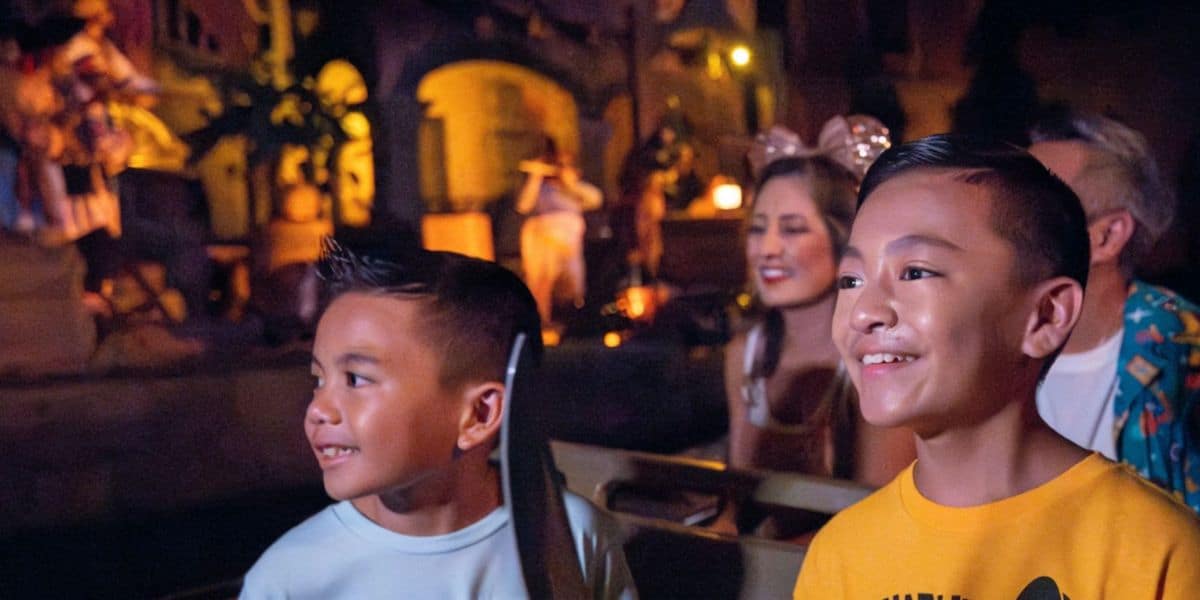
What Happens Next With Disney’s Proposed Warning System
For now, the Disney ride warning patent is best understood as a window into a possible future, not a new Walt Disney World boarding rule. Patent applications can protect concepts that never reach the parks, and Disney has not identified an attraction, launch date, test location, or implementation schedule for this system.
If Disney advances the idea, the biggest story may be where the line is drawn between an optional planning tool and an operational checkpoint. An opt-in feature that warns a guest before a personally unsettling scene would be very different from a system that requires a completed profile before entry.
Until Disney announces a test or rollout, physical warnings and existing accessibility resources remain the concrete guest-facing systems to watch. The August 20 filing shows that Disney is exploring a more individualized way to communicate attraction content. Whether that becomes a convenience, an accessibility tool, or a new layer in the boarding process remains unknown.