4
4
 Credit: Erica Lauren, Inside the Magic
As Walt Disney World navigates an era of unprecedented theme park attendance and soaring guest expectations, the conversation around park capacity has never been more urgent.
With major, long-term expansions on the horizon—including the highly anticipated Villains Land and the Cars franchise overhaul in Frontierland—The Walt Disney Company is explicitly acknowledging that Magic Kingdom needs to expand its physical footprint to absorb massive daytime crowds.
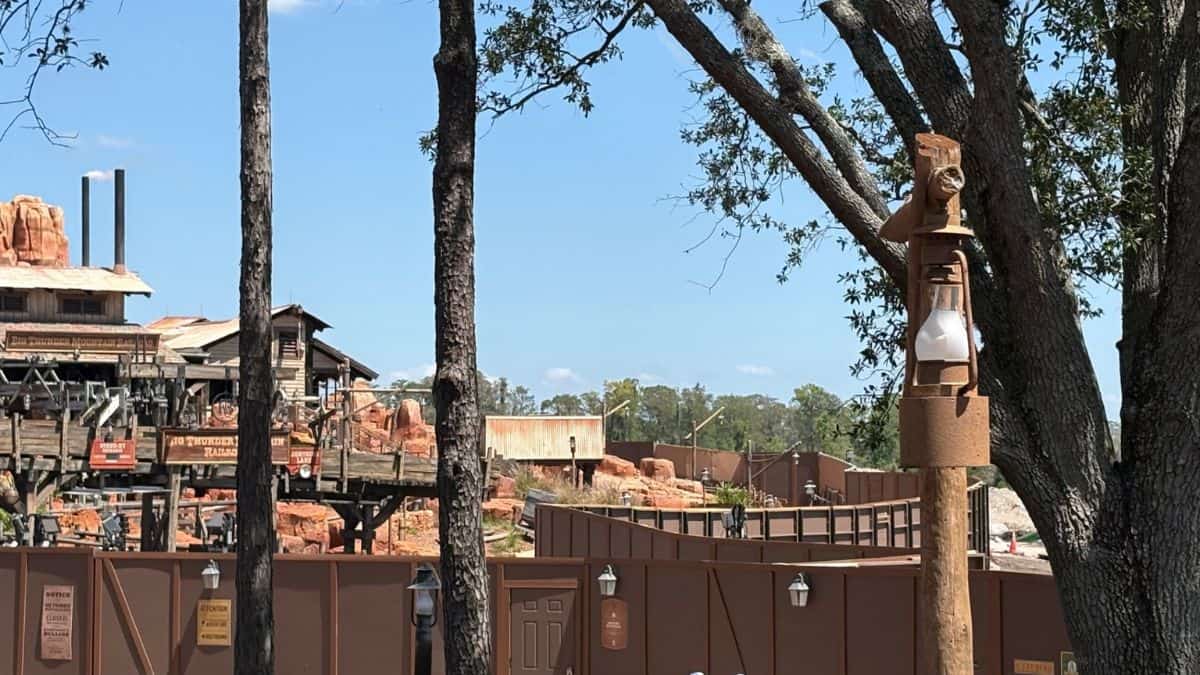
However, major ground-up expansions are notorious for their lengthy construction timelines, often taking four to five years to clear land, pour foundations, and open to the public. This leaves fans and theme park analysts asking a critical question: What can Disney do right now to alleviate wait times and disperse crowds?
The answer doesn’t lie hidden in the forests beyond Big Thunder Mountain. Instead, it is hiding in plain sight beneath the neon signs and retro-futuristic beams of Tomorrowland.
As noted in a viral social media perspective shared by theme park commentator Nick Chaps, Disney is currently sitting on an absolute goldmine of underutilized real estate within the right side of the park.
By activating the completely vacant show building that once housed Stitch’s Great Escape and fundamentally reimagining or removing the massive, land-consuming Tomorrowland Speedway, Walt Disney Imagineering could instantly inject thousands of guests per hour of capacity back into the park’s ecosystem.
The Ghost in the Tomorrowland Machine: The Abandoned Stitch Building
To understand the sheer scale of wasted crowd-absorption potential in Tomorrowland, one must look at the northern show building positioned directly across from Monsters, Inc. Laugh Floor.

This massive multi-theater complex has a rich history of serving as a heavy-hitting “people-eater” for the park. It originally opened as Flight to the Moon, transitioned to Mission to Mars, transformed into the legendary (and terrifying) ExtraTERRORestrial Alien Encounter in 1995, and finally became Stitch’s Great Escape! in 2004.
While Stitch’s Great Escape struggled with mixed reviews from park guests—most famously criticized for its infamous, nausea-inducing chili dog burp special effect—the ride served a vital operational purpose: it swallowed up to 1,000 guests per hour into a controlled, indoor, air-conditioned environment, taking immense pressure off the park’s outdoor queue lines.
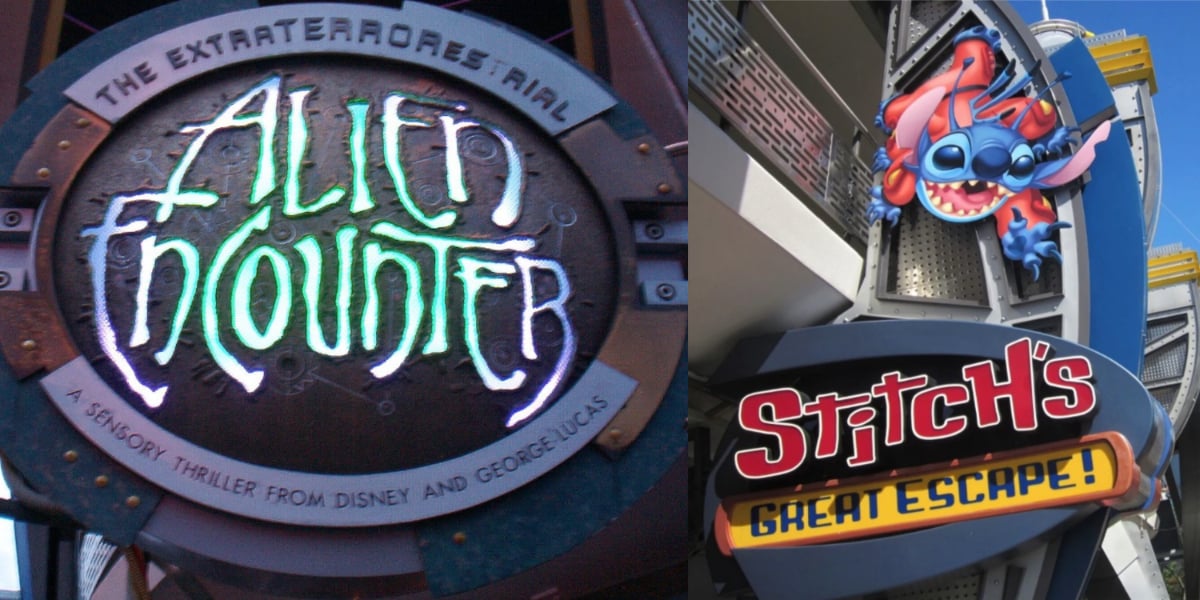
When the attraction quietly closed its doors on January 6, 2018, it was initially framed as a shift to seasonal operation. By 2020, Disney officially confirmed its permanent closure, stripping the exterior signage.
We are now well into the late 2020s, and this massive show building remains empty. Aside from the Tomorrowland Transit Authority PeopleMover gliding directly through the upper rafters of the structure, providing riders with a view of a darkened, hollowed-out room, the space has been entirely abandoned as an active attraction. For nearly a decade, Disney has let a premier, double-theater infrastructure sit vacant, functioning as little more than a seasonal character meet-and-greet entryway.
Leaving a show building of this size empty in the world’s most-visited theme park is a massive strategic misstep. Imagineering does not even need to break ground on a new foundation to fix this. The structural shell, the queue pathways, and the utility grids are already fully intact.
Whether Disney converts the space into a high-capacity, state-of-the-art 3D media simulator, an interactive walk-through experience, or a highly modern theater attraction, activating the Stitch building is the fastest, lowest-risk way to instantly absorb thousands of daily guests who are currently clogging Tomorrowland’s walkways.
The Real Estate Waste: Replacing the Tomorrowland Speedway
While the Stitch building represents a failure to utilize existing indoor structures, the Tomorrowland Speedway represents a failure to maximize actual physical land.

Opened on October 1, 1971, as the Grand Prix Raceway, this opening-day attraction has historical significance. Generations of children have experienced the milestone of “driving” a real car for the first time along its guide rails. But in 2026, the attraction’s format feels increasingly out of touch with both Tomorrowland’s theme and the logistical constraints of Magic Kingdom’s layout.
The Tomorrowland Speedway occupies an absolutely staggering amount of prime real estate. The ride’s expansive concrete track webs across a massive swath of land wedged directly between the Mad Tea Party in Fantasyland and TRON Lightcycle / Run.
When you evaluate the Speedway from a capacity-to-footprint ratio, the math simply does not work in Disney’s favor. The ride requires a massive physical footprint but yields a remarkably low hourly guest throughput due to slow loading times, vehicle spacing requirements, and frequent operational stoppages.
Furthermore, the attraction’s loud, gas-guzzling internal combustion engines emit constant noise pollution and strong exhaust fumes, directly conflicting with the sleek, clean-energy aesthetic anchored by the neighboring TRON plaza.
If Disney wants to truly solve its long-term capacity issues, removing or radically downsizing the Tomorrowland Speedway for a better, more modern ride is the ultimate solution.

The acreage currently occupied by the Speedway track is large enough to accommodate a massive, multi-launch indoor steel coaster, a cutting-edge trackless dark ride, or an entire, highly themed micro-land. Imagine a futuristic, multi-level electric racing attraction that stacks the track vertically, drastically reducing the ride’s ground footprint while doubling its hourly capacity. This pivot would allow Disney to preserve the nostalgic joy of a driving attraction while freeing up substantial square footage for a second, high-capacity E-ticket ride or multiple family-friendly flat rides.
Establishing the Ultimate Right-Side Crowd Sponge
The push for a Tomorrowland optimization project becomes even more critical when looking at the broader, park-wide logistics of Magic Kingdom.

When TRON Lightcycle / Run opened, it successfully drew millions of guests to the back-right corner of the park. However, because TRON is a high-thrill coaster with a strict height requirement and relies heavily on a digital Virtual Queue and Lightning Lane framework, it does not function as a standard “crowd sponge” for the general park population. Guests who do not secure a riding group or those with small children are left with fewer high-capacity options in the immediate area.
By simultaneously unlocking the Stitch building and replacing the aging Speedway, Disney can create a perfectly balanced ecosystem on the right side of the park. These updates would provide high-capacity, family-friendly alternatives that keep guests engaged, fed, and entertained without forcing them to return to the heavily congested hubs of Fantasyland and Main Street, U.S.A.
The Verdict: The Future is Hiding in Plain Sight
The Walt Disney Company is currently preparing to spend billions of dollars expanding its theme park empire over the next decade. But as the parks experience massive daily crowds, the fastest path to relief doesn’t require clearing uncharted forests or waiting out half-decade construction timelines.
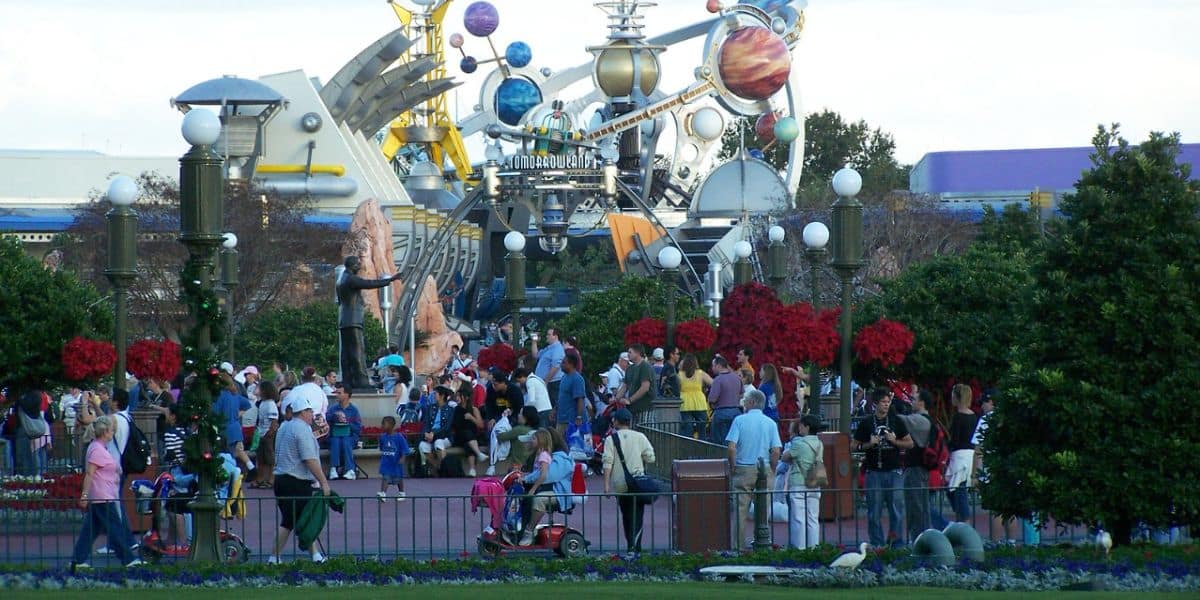
The structural foundations for Magic Kingdom’s immediate capacity solutions are already built. They are sitting right inside Tomorrowland, waiting for Disney to turn the key finally. By transforming the abandoned Stitch show building and replacing the land-heavy Tomorrowland Speedway with a high-capacity, modern experience, Imagineering can fix the park’s current layout issues and deliver the true “Tomorrow” that fans have been waiting for.