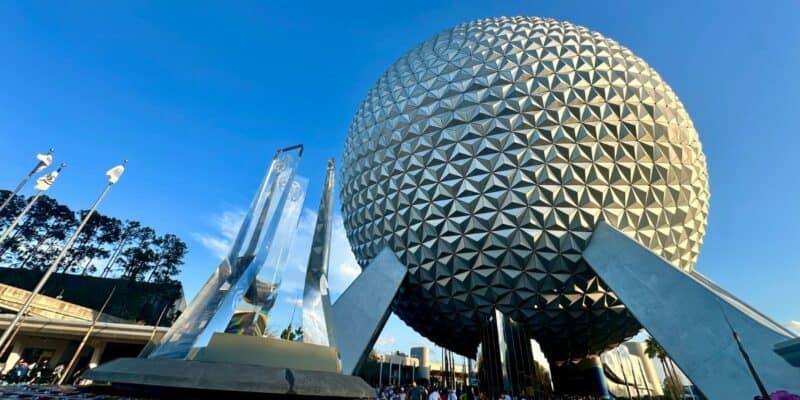
 Credit: Erica Lauren, Inside the Magic
There are certain recurring challenges at Walt Disney World that come up in the guest experience conversation often enough that the theme park community has developed a kind of weary familiarity with them. Crowds during spring break and summer.
Lightning delays on outdoor attractions. The particular frustration of a Lightning Lane selling out before you finish your morning coffee. And then, sitting in its own category entirely, the ongoing situation with bees at Joffrey’s Coffee and Tea Company kiosks across the Walt Disney World property.
The bee problem at Joffrey’s is not a new story. It has been developing for years across multiple park locations, with documented closures and limited menus forced by bee activity at kiosks throughout the resort. The appeal for bees is not difficult to understand. Joffrey’s kiosks are open-air food service locations that display syrups, pastries, and sweetened beverages in a theme park with approximately no shortage of floral landscaping and sugar-adjacent smells in every direction.
From a bee’s perspective, a Joffrey’s kiosk is not a problem. It is a destination. From the perspective of the cast members working inside those kiosks and the guests attempting to order from them, the situation has been considerably less welcoming.
The Magic Kingdom kiosk had already dealt with bee-related menu limitations as recently as November 2025. The EPCOT locations have had documented bee issues stretching back years.
And now, in what represents the most significant physical response to the ongoing situation that any Walt Disney World Joffrey’s location has undertaken, the EPCOT kiosks have been modified with windows and mesh screens designed to protect both the products inside and the cast members working there.
What Actually Changed at Disney
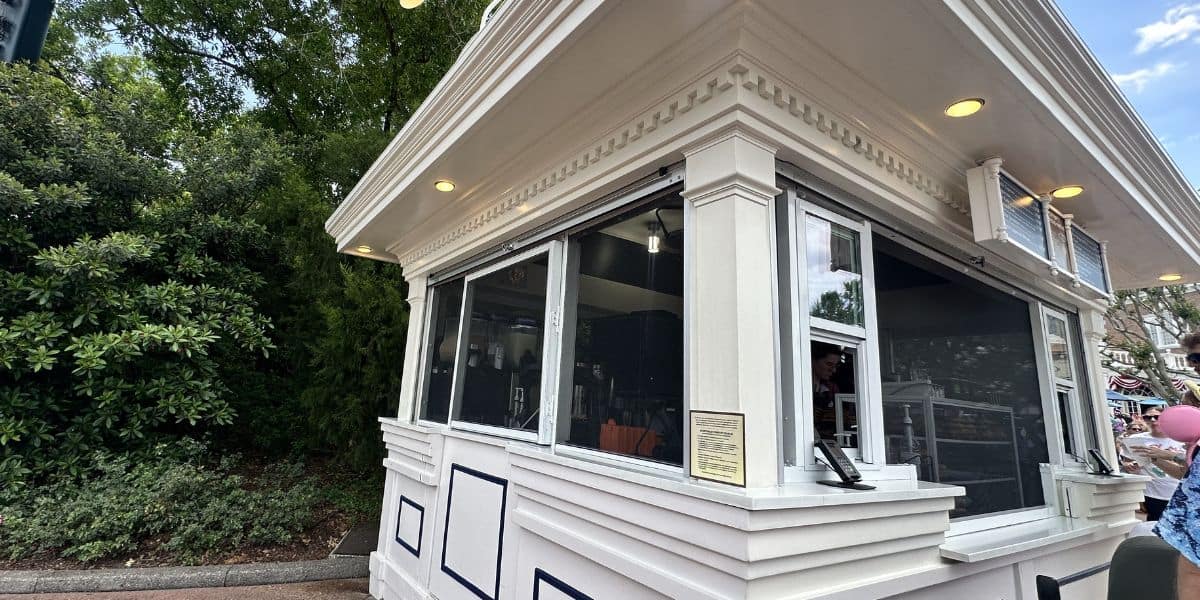
The EPCOT Joffrey’s booths previously operated with open sides, meaning the interior of each kiosk, including the syrup displays, donut cases, snacks, and everything else on offer, was directly accessible to the outdoor environment and everything in it.
The new modifications add windows and mesh screens to the formerly open sides of the booths, creating a physical barrier between the sweet-smelling contents of the kiosks and the bee population that has apparently been treating those contents as a communal resource.
Three EPCOT Joffrey’s locations have received the new enclosures. The booth near Disney Traders now has windowed and screened sides where open space used to be. The booth near The American Adventure features a screen in front of the donut case with windows on the sides through which guests can place orders.
The window frames at that location have been designed to match the theming of the surrounding booth, which reflects the kind of attention to aesthetic detail that Disney applies even to pest management solutions. The World Discovery booth has received similar white-framed windows, though the fit with the surrounding theming is slightly less seamless than the American Adventure installation.
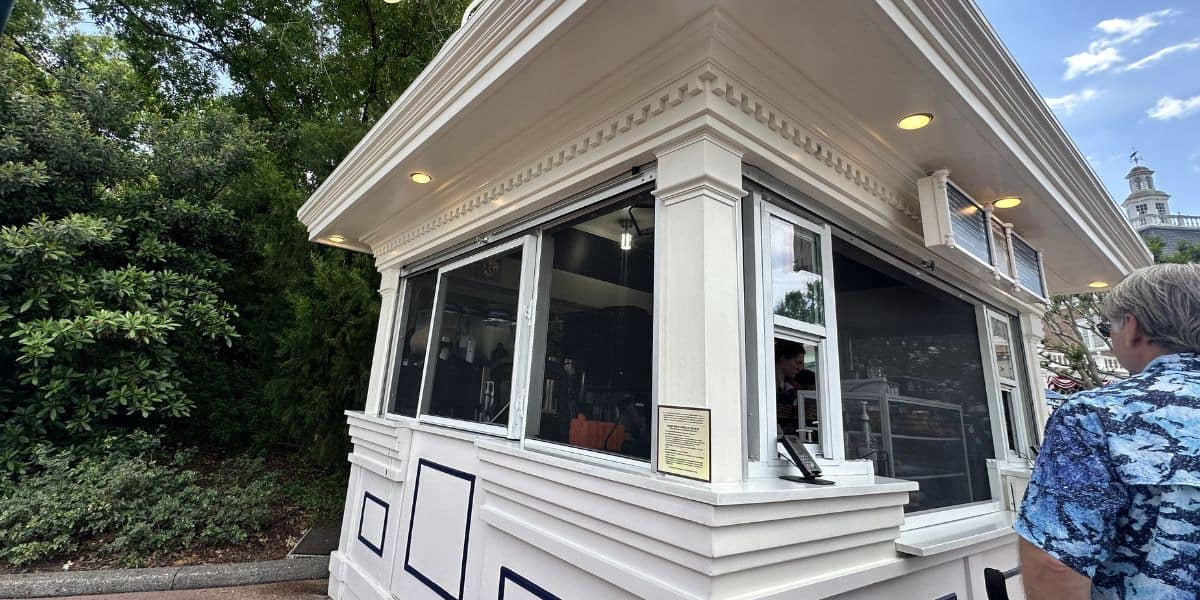
The design of the new enclosures maintains functionality while adding protection. There are still openings that allow cast members to communicate with and serve guests, and the mesh screens allow airflow to continue through the kiosks without creating a completely sealed environment.
The existing metal covers that slide down over the sides of each kiosk when closed overnight remain in place to cover the new window openings and screens when the locations are not operating.
Why Syrups Are the Core of the Problem
The specific challenge at Joffrey’s kiosks is worth understanding in context. Joffrey’s is not simply a coffee stand that happens to be located outdoors. The visual presentation of a Joffrey’s kiosk is built around the syrup display, the rows of flavored syrups that can be added to beverages and that are arranged in open view as part of the service model.
Those syrups, which include sweet, floral, and fruit-based flavors, are precisely the kind of concentrated sugar source that bees are programmed to locate and return to repeatedly. An open-sided kiosk displaying multiple syrup varieties in an outdoor setting inside a theme park is, from an entomological standpoint, an extremely well-marketed proposition.
The cast members working inside those kiosks have been dealing with the consequences of that proposition for years, and the new enclosures represent a meaningful improvement in their working conditions alongside the protection they provide for the products themselves.
What Comes Next at Disney
Whether other Walt Disney World Joffrey’s locations will receive similar enclosures has not been confirmed, but the possibility is real, given that the bee issues have not been limited to EPCOT. The Magic Kingdom kiosk is already more enclosed than the EPCOT booths were prior to the recent modifications, but it has still experienced bee-related operational impacts.
If the EPCOT enclosures prove effective at managing the problem, extending the solution to other affected locations would be the logical next step.
For guests visiting EPCOT, the modified kiosks are visually distinct from their previous appearance but remain fully operational with the same service model. The windows and screens change the look of the booths without altering the experience of ordering experience, which is exactly the balance Disney was trying to strike: functional modifications that aren’t visually disruptive in a park where theming consistency matters at every scale.
The bees were winning for a while. The screens appear to be Disney’s answer.