
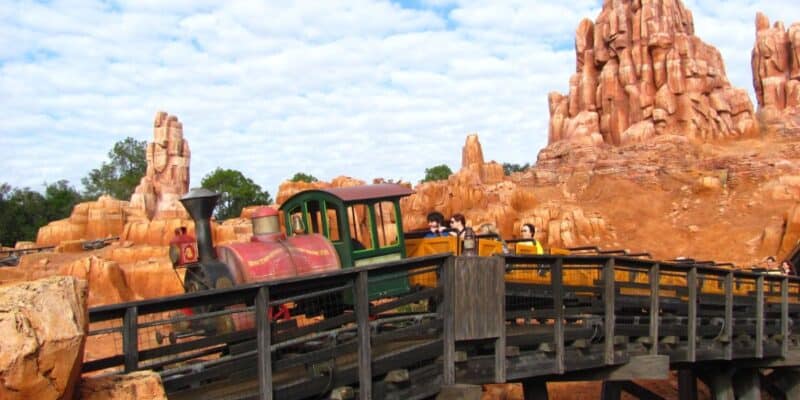
 Credit: Jeremy Thompson, Flickr
For Disney fans, few phrases evoke as much adrenaline as “The Wildest Ride in the Wilderness.” Since its debut, Big Thunder Mountain Railroad has stood as the quintessential family “mountain” attraction—perfectly balancing immersive storytelling with the jerky, runaway-train thrills of the Old West.

However, as the Magic Kingdom prepares to welcome the attraction back from its extensive 2026 refurbishment, a shadow of doubt has been cast over the Rivers of America. Following a viral video circulating on social media this week, the Disney community has been pushed into a state of high-altitude anxiety. The concern? The beloved coaster is running significantly slower than it did before the refurbishment.
But before you trade in your cowboy hat for a box of tissues, it’s time to look at the cold, hard science of roller coaster testing. While the “eye test” might suggest a sluggish train, the reality of Disney Imagineering suggests that the “Wildest Ride” is doing exactly what it’s supposed to do during its final trial runs.
The Video That Set the Wilderness Ablaze
The controversy began on April 9, 2026, when a clip began trending showing a Big Thunder Mountain train cresting the second lift hill and navigating the subsequent spiral. The reaction from fans was immediate and pointed, with many questioning if the ride was “crawling” through the helix and expressing fears that Disney had “neutered” the experience during its downtime.
The footage immediately garnered thousands of views, sparking a firestorm of speculation. Long-time guests began comparing the footage to old “POV” videos on YouTube, claiming that the train seemed to lack the “snap” and “whip” that defined the coaster’s final act. Some went so far as to suggest that Disney had installed new braking systems or trim brakes to reduce wear and tear on the new track—a move that would permanently lower the attraction’s thrill level.
Physics 101: Why “Empty” Means “Slower”
To the untrained eye, a roller coaster is a static machine—it should run at the same speed every time, right? Wrong. In the world of coaster physics, mass matters.
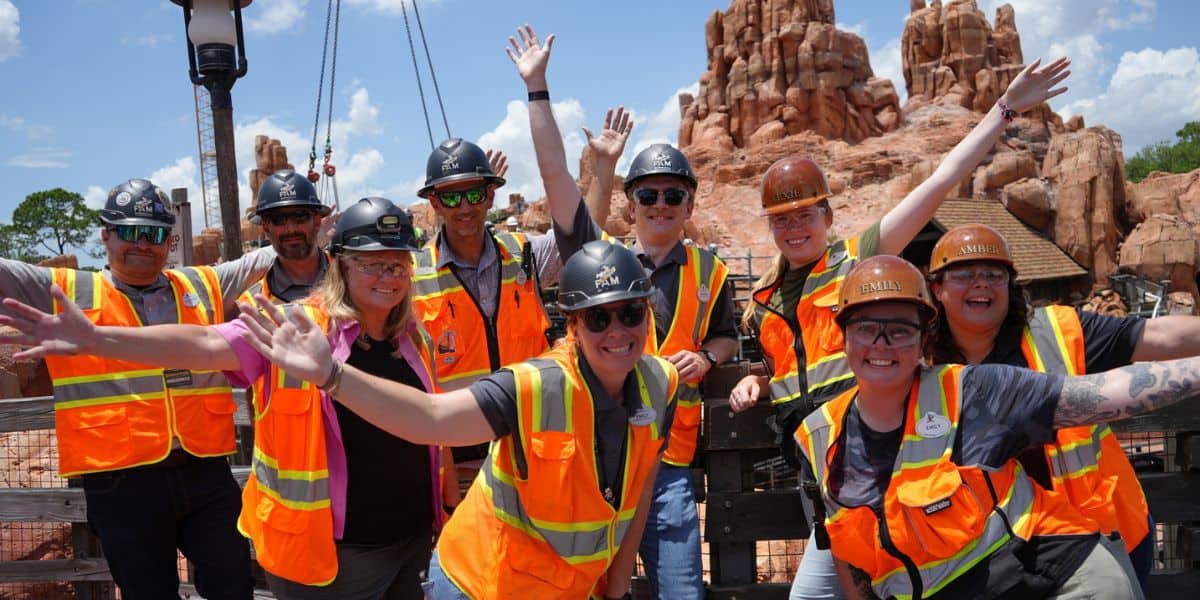
When guests see Big Thunder Mountain testing right now, they are seeing empty trains. A standard Big Thunder Mountain train consists of six cars, each capable of carrying 30 to 40 passengers when fully loaded. If you assume an average weight of 150 pounds per person, a fully loaded train is carrying an additional 4,500 to 6,000 pounds of momentum-generating mass.
Gravity is the only motor a coaster has once it leaves the lift hill. A train weighing 6,000 pounds has significantly more potential energy and momentum. This allows it to “plow” through friction—whether wind resistance or the friction between the wheels and the steel track—much more effectively than an empty train.

An empty train is light. It is more susceptible to the “drag” of the magnetic braking fins and the friction of the brand-new grease on the brand-new track. Imagine rolling a marble down a slide versus rolling a bowling ball. The bowling ball (the loaded train) will maintain its velocity much better through curves and inclines than the marble (the empty train).
Furthermore, the “new” track actually has a “break-in” period. Imagineers often note that as the wheels wear into the new steel and the bearings reach their optimal operating temperature through repeated cycles, the ride naturally picks up speed. What guests are seeing in the viral footage is a “cold,” empty train on a “stiff” new track.
The Refurbishment Reality: Why Disney Wouldn’t Slow It Down
The 2026 refurbishment of Big Thunder Mountain Railroad was one of the most comprehensive in the ride’s history. It included a complete track replacement in several key sections, an overhaul of the ride’s sensor “zones,” and a refresh of the iconic “explosive” final lift-hill effects.
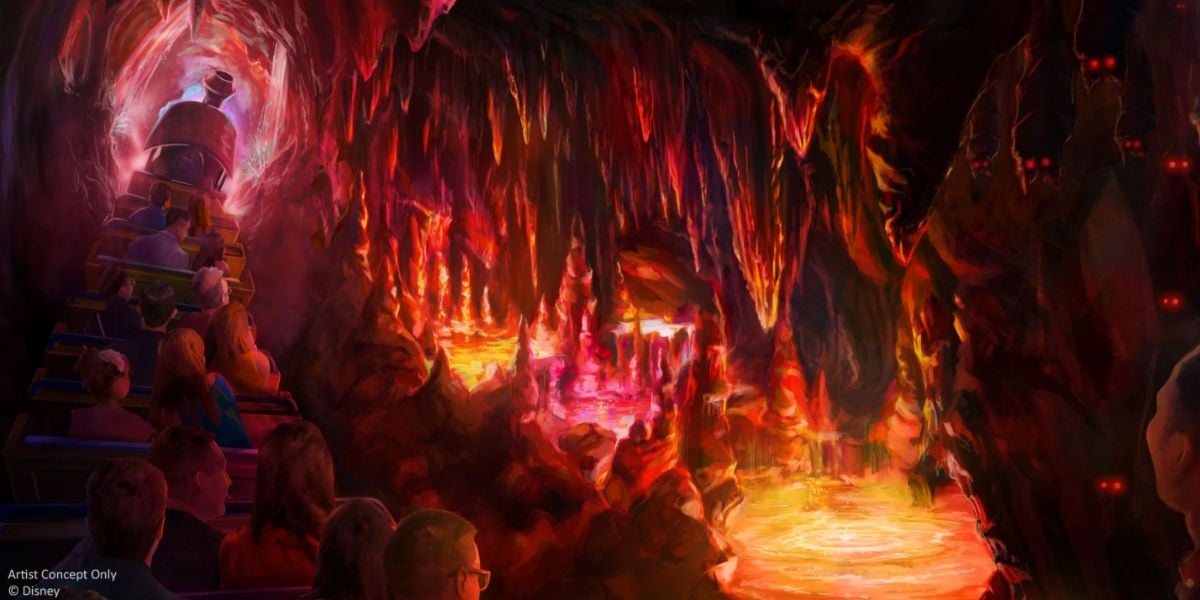
From a business and engineering perspective, Disney has no incentive to slow the ride. Big Thunder Mountain’s popularity stems from its “wild” nature. However, Disney has an incentive to make the ride smoother.
When a track is replaced, the “shaking” and “vibration” that guests often associate with speed are removed. This is a common psychological trick on roller coasters: a rough ride feels faster because your body is being tossed around. A smooth, brand-new track can feel “slow” simply because it isn’t punishing your spine.

By the time the ride reopens on May 3, the trains will have undergone thousands of cycles. Many of the final testing days will involve “water dummies”—large plastic containers filled with water to simulate the weight of a full load of guests. If guests timed those runs, they would find the results much more in line with the classic Big Thunder experience.
The Verdict: Wait for May 3
It is easy to get caught up in “Main Street Hysteria” when a favorite attraction is behind construction walls. We have seen this before with previous refurbishments—fans panic based on a single photo or a five-second clip, only to realize the final product is better than ever.
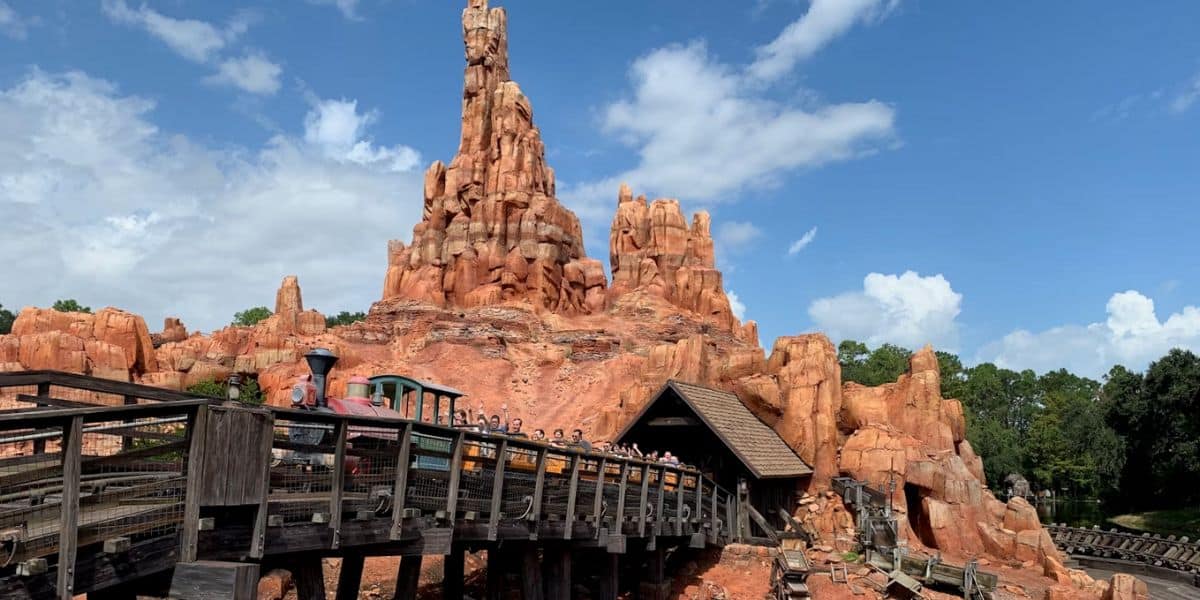
The viral footage is a classic example of “testing anxiety.” Until we have 40 screaming guests sitting in those benches, providing the mass needed to whip that train through the desert landscape, any “speed test” is scientifically invalid.
Disney has confirmed that Big Thunder Mountain Railroad will officially reopen on May 3, 2026. On that day, the “Wildest Ride in the Wilderness” will be put to the ultimate test: the weight of its fans.
Conclusion: Keep Your Hands and Arms Inside the Car
The internet loves a controversy, and “Disney slowing down rides” is a perennial favorite. But in the case of Big Thunder Mountain, the laws of physics are the strongest evidence we have. An empty train is a slow train, but a full train is a legend.

We will know for certain on May 3. Until then, take the “eye-witness” reports with a grain of salt (or perhaps a grain of Frontierland dust). The Wildest Ride in the Wilderness isn’t going anywhere—it’s just getting ready for its next forty years of runaway fun.
Are you planning to be there for the May 3 reopening? Do you think the new track will change the ride’s “vibe”? Let’s discuss in the comments below!