
 Credit: Inside the Magic
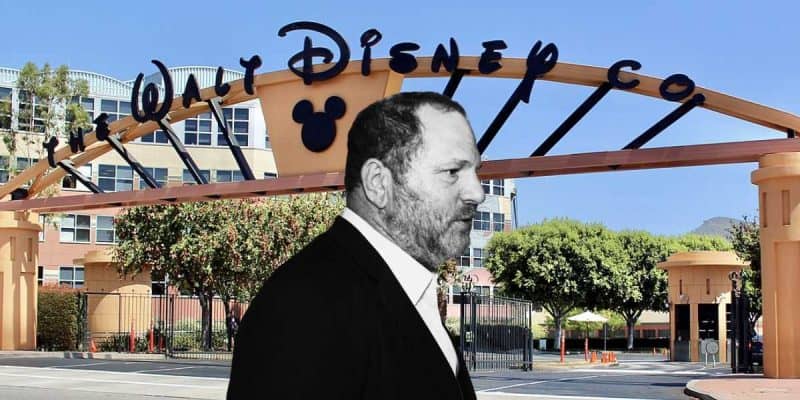
In the annals of Hollywood history, few partnerships were as lucrative—or as ultimately toxic—as the one between The Walt Disney Company and the Weinstein brothers. For years, the “House of Mouse” provided the financial engine for Miramax, the studio that redefined independent cinema and brought home a mountain of Oscars. But today, that legacy has curdled into a PR nightmare that Disney simply cannot shake.
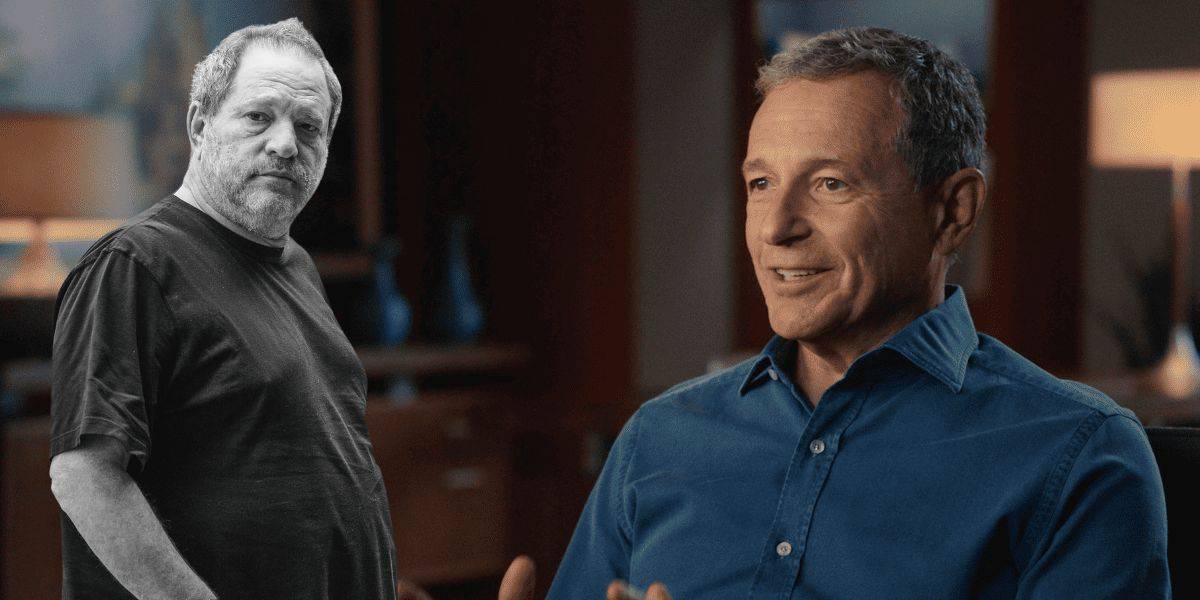
In a shocking revelation that has reignited public fury, new reports have surfaced—bolstered by a candid jailhouse interview—confirming that Harvey Weinstein, the disgraced mogul currently serving time for multiple sex crimes, is still allegedly receiving a monthly pension check from Disney. To the average observer, it seems incomprehensible: How could a company built on “family values” continue to fund the retirement of one of history’s most notorious predators?
The answer lies in a complex web of 1990s contract law, federal pension protections, and a landmark acquisition that changed Hollywood forever.
The $60 Million Marriage: When Disney Bought Miramax
To understand why Disney is cutting checks to a prison commissary in 2026, one must look back to 1993. At the time, Disney, under the leadership of Michael Eisner and Jeffrey Katzenberg, was looking to expand beyond animation and family-friendly live-action. They wanted “prestige.” They wanted Oscars.
They found their solution in Miramax, the scrappy indie distributor run by the Weinstein brothers, Harvey and Bob. Disney purchased Miramax for approximately $60 million. As part of the deal, the Weinsteins remained in charge of the studio, but they became, for all intents and purposes, high-level Disney executives.
For the next twelve years, the Weinsteins were on the Disney payroll. They were the architects of hits like Pulp Fiction, The English Patient, and Shakespeare in Love. Because they were technically employees of the parent company, they were enrolled in executive compensation packages, which included the standard Disney pension plan.
The “Bad Boy” Clause That Wasn’t
When the Weinstein scandal broke in 2017, the world expected every tie to be severed. Disney was quick to distance itself, with CEO Bob Iger calling Weinstein’s behavior “abhorrent and unacceptable.” However, distancing oneself publicly is much easier than dismantling a legally vested pension.
In most executive contracts today, there are “morality clauses” or “bad boy” provisions that allow a company to claw back bonuses or cancel future payments if an executive is convicted of a crime. However, the contracts signed in the early 90s were often far more protective of the employee. Furthermore, once a pension is “vested”—meaning the employee has worked the required number of years to earn it—it becomes protected by federal law.
The Power of ERISA: Why Disney’s Hands Are Tied
The primary reason Harvey Weinstein still receives money from Disney is a federal law known as ERISA (the Employee Retirement Income Security Act of 1974).

Miramax Films (United States) / Universal Pictures (International)
ERISA was designed to protect the retirement assets of American workers. One of its most rigid rules is the “non-forfeiture” provision. Under federal law, once an employee has earned their pension, it is considered their legal property. Even if that employee later commits a heinous crime, the company generally cannot “cancel” the pension as a form of punishment.
Legal experts point out that unless the pension plan specifically included a provision allowing forfeiture upon criminal conviction—and that provision complied with strict federal guidelines—Disney has no legal mechanism to stop the payments. If they were to stop the checks, Weinstein’s legal team could likely sue the company for violating labor laws, creating a secondary legal circus that Disney desperately wants to avoid.
The Payday: $60,000 a Month?
Reports from insiders and the recent Independent report suggest that Weinstein’s monthly take from the House of Mouse is $60,000, of which half goes to his ex-wife and more goes to his legal expenses/victims. While that is a drop in the bucket for a billionaire corporation, it represents a significant sum for a man whose assets have been largely liquidated by legal fees and civil settlements.

In his recent jailhouse interview, Weinstein reportedly alluded to his financial “security,” noting that his “old friends at Disney” were still taking care of him. While likely intended as a taunt to his detractors, the comment highlights a dark irony: the company that creates dreams for children is inadvertently providing a financial safety net for a man who destroyed the dreams of so many.
The Civil Suit Connection: Where is the Money Going?
There is a silver lining for the survivors of Weinstein’s abuse. While Disney is legally obligated to pay the pension, the money doesn’t necessarily sit in a bank account for Harvey to enjoy.
Because of the massive civil judgments against him, much of Weinstein’s incoming cash flow—including his pensions and residuals—is subject to liens and garnishments. In many cases, these Disney checks are diverted directly to the victims’ compensation funds or to pay off outstanding legal debts.
However, for the public, the optics remain devastating. Every headline that links the word “Disney” with “Weinstein Pension” serves as a reminder of an era when Hollywood’s most powerful players looked the other way. At the same time, the “Miramax Machine” operated with impunity.
A PR Nightmare for the Iger Era
For current Disney CEO Bob Iger, the Weinstein pension is a ghost that refuses to be exorcised. Disney has spent the last several years navigating a “culture war” and striving to maintain its status as the world’s most trusted family brand. The revelation that they are effectively a life-long benefactor of Harvey Weinstein—even if by legal compulsion—is a thorn in the side of their branding efforts.

Credit: Sony
Critics argue that Disney should have fought harder to litigate the pension away, even if the odds were against them, simply to take a moral stand. Others suggest the company should donate an equivalent amount of the pension to sexual assault advocacy groups to offset the “tainted” money.
Conclusion: The Legal Reality vs. The Moral Outrage
The case of Harvey Weinstein’s Disney pension is a stark reminder of the permanence of the legal system. It serves as a cautionary tale for corporations: the executive you hire today may become the pariah of tomorrow, and the contracts you sign in a boardroom can have consequences that last for decades.

As Weinstein remains behind bars, the checks keep being cut. Disney remains trapped between a federal law that protects retirement assets and a global audience that demands moral accountability. In the end, the “Disney Pension” is the final, unwanted tie in a marriage that Disney wishes it had never entered—a monthly reminder that some mistakes are too legally entrenched to be truly erased.