 1
1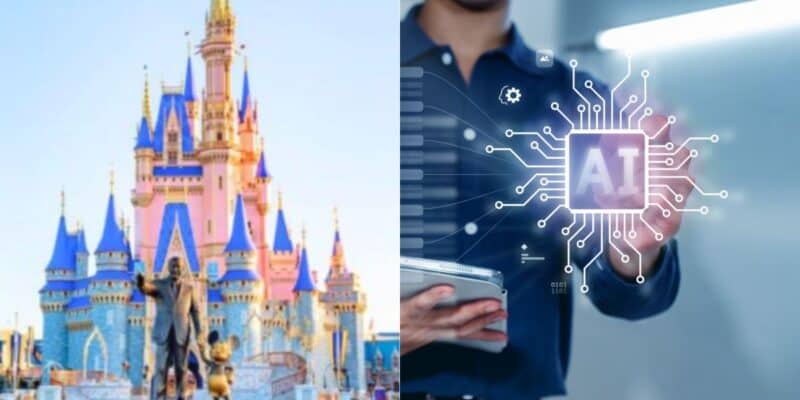
 Credit: Inside the Magic
Artificial intelligence has quickly gone from a niche experiment to something that’s reshaping entire industries. It’s changing how people create, how companies operate, and how audiences engage with content. For entertainment giants, it’s not just a tool—it’s becoming part of the foundation.
The Walt Disney Company has been right in the middle of that conversation. With one of the most valuable libraries of characters and stories in the world, Disney has every reason to explore how AI can expand its reach and deepen its connection with fans.
For a while, it seemed like Disney was ready to move aggressively into that space. There were clear signs the company was testing ways to blend storytelling with new technology, opening the door to more interactive and personalized experiences.
But now, that path looks a little different.
A major partnership that once hinted at a bold new direction has come to an abrupt end. And while that might sound like a setback, it could actually open the door to something much bigger.

The Deal That Pointed Toward a New Kind of Storytelling
Back in December 2025, Disney struck a three-year licensing agreement with Sora, OpenAI’s video-generation platform. The deal immediately stood out because of what it represented.
Under the agreement, Disney characters would be licensed for use within Sora, allowing users to generate short, prompt-based videos featuring recognizable IP. These clips could be shared socially, turning fans into participants rather than just viewers.
It was a major shift in how Disney storytelling could evolve.
Instead of only consuming content, audiences could interact with it—creating small, personalized moments using characters they already loved. At the same time, Disney and OpenAI also signaled plans to collaborate on new experiences for Disney+ subscribers, including curated AI-generated content.
This wasn’t just a side project. It pointed toward a future in which streaming, social media, and user-generated content could intersect within a Disney-controlled ecosystem.
And for a brief moment, it felt like Disney had found its entry point into AI at scale.
Why Sora’s Shutdown Changed Everything
That momentum didn’t last long.
OpenAI recently announced that it is shutting down the Sora app and stepping away from its current approach to AI-generated video products. The move came after months of challenges tied to how the platform handled intellectual property and likeness rights.
Sora itself originally debuted in late 2024, with broader rollout and increased visibility throughout 2025. As it expanded, it quickly drew the attention of Hollywood studios and talent, many of whom raised concerns about how their characters and identities could be used in AI-generated content.
OpenAI made adjustments, giving rights holders more control, but those concerns didn’t fully go away.
In a public statement, the company said, “We’re saying goodbye to Sora. To everyone who created with Sora, shared it, and built a community around it: thank you. What you made with Sora mattered, and we know this news is disappointing. We’ll share more soon, including timelines for the app and API and details on preserving your work.”
With that, one of the most talked-about AI video tools in the industry suddenly disappeared from the equation.
And that left Disney with a decision to make.
Disney Walks Away—but Not From AI
Following the announcement, Disney reportedly withdrew from its agreement with Sora. That partnership included a planned $1 billion investment and a framework for licensing Disney characters into the platform.
Once Sora’s future became uncertain, the deal no longer made sense.
But what stands out most is Disney’s response.
“As the nascent AI field advances rapidly, we respect OpenAI’s decision to exit the video generation business and to shift its priorities elsewhere,” a Disney spokesperson said. “We appreciate the constructive collaboration between our teams and what we learned from it, and we will continue to engage with AI platforms to find new ways to meet fans where they are while responsibly embracing new technologies that respect IP and the rights of creators.”
That statement makes one thing clear—Disney isn’t stepping away from AI. It’s simply reassessing how it wants to approach it.
Where Disney Could Go Next With AI
Losing a partner like Sora doesn’t close the door. If anything, it gives Disney more flexibility to explore other paths.
One of the most immediate opportunities is in streaming.
Even without user-generated video tools, Disney+ could still evolve through AI. The platform could introduce more advanced personalization, tailoring recommendations not just to viewing history but also to mood, time of day, or even interactive prompts. AI could also be used to surface deeper cuts from Disney’s library, connecting fans with content they might not have discovered otherwise.
There’s also potential for interactive storytelling that doesn’t rely on user-generated content. Think guided experiences where viewers influence outcomes within controlled environments, keeping Disney’s IP protected while still offering something new.
Beyond streaming, the parks may be where AI becomes most visible.
Disney has already begun experimenting with more advanced robotics and character interactions. The roaming Olaf figure at Disneyland Paris is a strong example of how technology can bring characters to life in a dynamic, unscripted way.
That same approach could expand across the parks. AI could allow characters to respond more naturally to guests, making meet-and-greets feel less rehearsed and more personal. Attractions could adapt in real time, adjusting dialogue or minor elements in response to guest interactions.
Operationally, AI could also help Disney manage crowds, optimize ride wait times, and improve overall park flow—something that has become increasingly important as attendance continues to rise.
And then there’s the potential for entirely new partnerships.
Disney doesn’t need to rely on a single company. It could work with multiple AI providers, each focused on different areas—streaming, park technology, content creation, and internal production tools. That approach would give Disney greater control and reduce the risk of tying its future to a single platform.
A Different Kind of AI Future
It’s easy to view the collapse of this partnership as a setback.
In reality, it may be something else entirely.
The Sora deal gave Disney a glimpse of what was possible, but it also exposed the challenges of integrating AI into a company built on intellectual property. Questions around control, ownership, and creative integrity aren’t going away anytime soon.
By stepping back now, Disney has a chance to refine its approach.
Instead of rushing into one major platform, it can build a more flexible strategy—one that blends innovation with the safeguards needed to protect its brand.
And that may ultimately lead to a stronger outcome.
Disney’s “AI Future” hasn’t disappeared. It’s just evolving.
And the next version of that future may look very different from what anyone expected just a few months ago.