 5
5
 Credit: Disney
The dream of a “Happily Ever After” in the heart of the Middle East has long been the subject of industry speculation and high-level corporate negotiations. For years, the Walt Disney Company has eyed the United Arab Emirates—specifically Abu Dhabi—as the final frontier for its global theme park empire. With its world-class infrastructure, burgeoning tourism sector, and the ambitious “Vision 2030” initiative, Abu Dhabi seemed the perfect site for a seventh international Disney Resort.

However, as we enter the spring of 2026, the “Magic Kingdom” is facing a reality far grimmer than any fairy tale. Recent military escalations between the United States and Iran have cast a dark shadow over American corporate interests in the Persian Gulf. As Iranian retaliation begins to target Gulf Arab states that host U.S. military assets, the feasibility of building a multi-billion-dollar American cultural icon in Abu Dhabi is being called into question.
The 2026 Geopolitical Storm: A Region Under Fire
On February 28, 2026, the Middle East’s geopolitical landscape shifted violently. According to reports from Al Jazeera, multiple Gulf Arab states—including the UAE, Qatar, and Kuwait—became the targets of sophisticated Iranian retaliatory strikes. These attacks were not random; they specifically targeted nations hosting U.S. military assets.

The UAE is home to Al Dhafra Air Base, a critical hub for U.S. Air Force operations in the region, housing thousands of American personnel and advanced drone and refueling capabilities. By providing a staging ground for U.S. interests, Abu Dhabi has effectively found itself on the front lines of a “shadow war” that has finally stepped into the light. For a company like Disney, which serves as a global ambassador for American soft power, this development is a logistical and security nightmare.+1
The Security Dilemma: Protecting the “Happiest Place on Earth”
The primary issue Disney encounters in Abu Dhabi is the physical safety of its guests and cast members. A Disney park is designed to be an immersive escape, but that immersion is impossible to maintain under the threat of ballistic missile barrages or drone swarms.

- National Special Security Events (NSSE) Standards: Disney parks are typically high-security zones, but protecting a park in Orlando or Anaheim is vastly different from protecting one in Abu Dhabi. If the UAE continues to be a target of Iranian retaliation, Disney would be forced to integrate missile defense systems (such as the THAAD or Patriot batteries already in the UAE) into the park’s perimeter design.
- The “Soft Target” Reality: American corporations are often viewed as extensions of the U.S. government. A strike on an American military base is an act of war; a strike on an American theme park is a catastrophic blow to the American national psyche and global brand. Disney’s presence in Abu Dhabi turns a civilian tourist destination into a high-profile “soft target” for regional actors looking to strike back at the U.S. without engaging in direct symmetrical warfare.
The Soft Power Backlash: The Irony of “Woke” and “Western”
Disney’s expansion into the Middle East was already navigating a minefield of cultural sensitivities. However, the current fight with Iran adds a layer of political blowback. As American interests in the region face increased scrutiny, Disney becomes a lightning rod for anti-Western sentiment.

The irony is not lost on observers: while conservative groups in the U.S. criticize Disney for being “too woke,” regional adversaries in the Middle East often view Disney as the ultimate symbol of Western decadence and American imperialism. Building a park in a state that hosts the very U.S. drones used in regional strikes creates a brand association that Disney—a company that thrives on universal neutrality—cannot easily shake.
The Economic Toll: Insurance, Shipping, and “War Risk”
Beyond the physical danger, the economic hurdles are mounting. The February 2026 strikes have sent “war risk” insurance premiums skyrocketing for Western companies operating in the Gulf.

- Insurance Premiums: Insuring a facility as large and complex as a Disney park in a conflict zone could cost hundreds of millions of dollars annually, potentially eating into any profit margins the Abu Dhabi park hoped to generate.
- Supply Chain Disruptions: Disney relies on a global supply chain for everything from ride components to plush toys. With the Strait of Hormuz and the Red Sea under constant threat of blockade or drone strikes, the logistical cost of building and maintaining a park in Abu Dhabi has become prohibitively expensive.
- Tourism Exodus: A theme park requires a steady stream of international travelers. If the region is perceived as a war zone, Western tourists will stay home, and regional tourists may avoid American-branded sites to evade being caught in the crossfire of retaliatory strikes.
The Abu Dhabi Vision vs. The Iranian Reality
Abu Dhabi has invested billions in Yas Island and Saadiyat Island, creating a “cultural district” that includes the Louvre Abu Dhabi and Warner Bros. World. The inclusion of a Disney park was supposed to be the crown jewel of this diversification strategy—a way to move the economy away from oil and toward global tourism.

However, the UAE’s strategic partnership with the U.S. military is now at direct odds with its tourism goals. As long as Abu Dhabi hosts American assets used to counter Iranian influence, it remains a legitimate target in the eyes of Tehran. For Disney, the question is no longer “How do we build this?” but “Should we build this at all?”
The “Blowback” to American Interests
The current conflict highlights a growing trend of “blowback” for American interests in the region. For decades, American corporations benefited from the U.S. military’s security umbrella. In 2026, that umbrella has become a lightning rod.

When Iran retaliates against states hosting U.S. assets, the “American brand” suffers. We are seeing a retreat of American corporate ambition in the region as the risk-to-reward ratio turns negative. If Disney—a company with seemingly infinite resources and a history of long-term planning—cannot find a way to secure a park in the UAE, it sends a chilling message to every other American business eyeing the Middle East.
Conclusion: A Kingdom on Hold?
Disney is a company that plans in decades, not years. While the allure of the Abu Dhabi market remains strong, the February 2026 strikes have forced a re-evaluation of the American footprint in the Gulf. The “Magic Kingdom” requires peace, stability, and a sense of safety to thrive. In a region where American assets are currently being targeted in a high-stakes game of regional chess, the prospect of a Disney Abu Dhabi remains a beautiful but dangerous mirage.
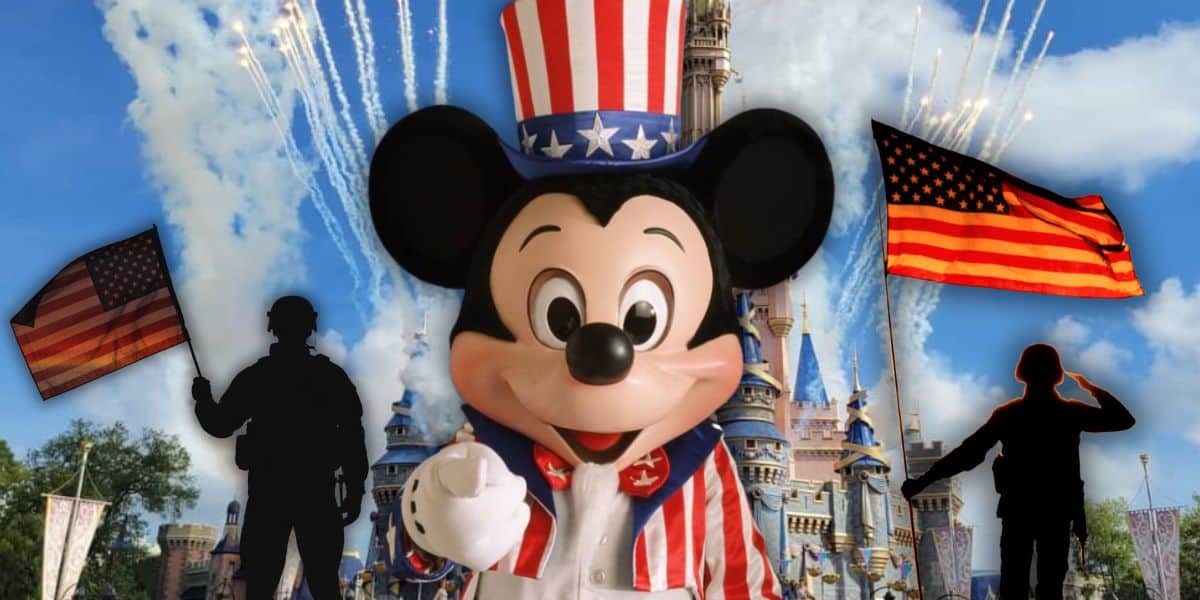
As the conflict with Iran continues to simmer, the Walt Disney Company finds itself in an unfamiliar position: caught in a real-world drama where no amount of “magic” can guarantee a happy ending.
Do you think the UAE is too dangerous for an American icon like Disney, or should the project move forward despite the risks? Let us know in the comments below.