
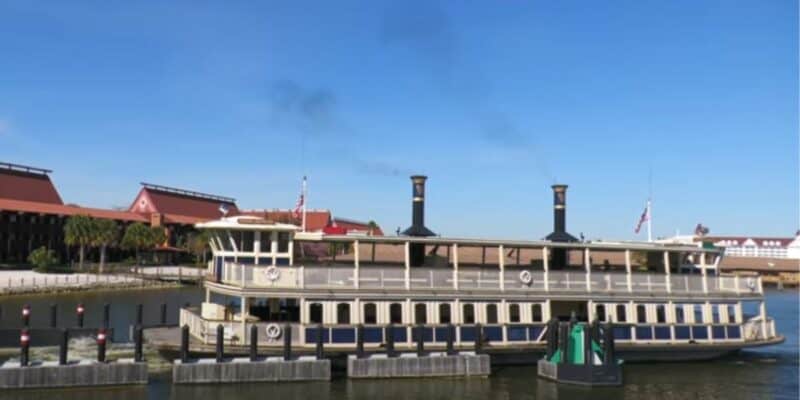
 Credit: 4K WDW on YouTube, Video Screenshot
There’s something uniquely magical about arriving at Magic Kingdom. Whether you’re gliding across Seven Seas Lagoon with Cinderella Castle rising in the distance or stepping off the monorail platform for that first glimpse of Main Street, U.S.A., the experience sets the tone for the entire day.
For millions of guests visiting Walt Disney World each year, transportation isn’t just a logistical necessity—it’s part of the show. Across 43 square miles, Disney orchestrates one of the largest private transportation systems in the country, seamlessly moving guests between four theme parks, more than two dozen hotels, and Disney Springs via buses, monorails, boats, the Disney Skyliner, and even the Lyft-powered Minnie Van service.
But as attendance continues to surge—especially at Magic Kingdom, the most-visited theme park on the planet—pressure points inevitably form. And recently, signs of strain have begun to surface in one of the park’s most iconic arrival points.

Even the Most Magical Transportation System Faces Growing Pains
Magic Kingdom operates differently than the other Walt Disney World parks. Because the park sits across Seven Seas Lagoon from its primary parking lot, guests must first stop at the Transportation and Ticket Center before boarding a monorail or ferry boat.
That extra step adds a layer of complexity to the guest experience. During peak travel periods—especially after nighttime fireworks—the area becomes a sea of strollers, tired families, and guests all attempting to leave at once.
Fans have long debated which option is faster: the monorail or the ferry boat. The ferry offers stunning views and can move large crowds at once, making it a favorite for many visitors. But when crowd levels spike, the sheer number of guests funneling toward the dock can overwhelm the space.

Subtle Clues Suggest Disney Has Been Monitoring a Flow Issue
Walt Disney World is known for continuously evaluating operations, even when guests don’t notice. Infrastructure updates often begin quietly—with permits filed long before construction walls appear.
According to newly filed documents with local Florida government, Disney has taken steps to address congestion at one of Magic Kingdom’s busiest departure points.
While the permits don’t mention sweeping transportation overhauls or new ride systems, they do point to something more foundational: space.

Disney Files Permit to Expand Magic Kingdom Ferry Boat Queue
The core of the update centers on the ferry boat dock that transports guests between Magic Kingdom and the Transportation and Ticket Center parking lot.
Walt Disney World has officially filed permits to expand the queue area for the large ferry boats operating across Seven Seas Lagoon. The expansion would create additional space for guests waiting to board, a move that strongly suggests current capacity has been insufficient during high-traffic periods.
#disney is preparing an extension of the ferryboat dock at the entrance to Magic Kingdom A permit mentions an enlarged ferry landing and a larger waiting area on the Seven Seas Lagoon to streamline access A discreet but strategic project –@DisneyGazetteFr on X
#waltdisneyworld #disney prépare une extension du quai des ferryboats à l’entrée de Magic Kingdom⛴️
Un permis évoque un embarcadère agrandi et une zone d’attente plus vaste sur le Seven Seas Lagoon pour fluidifier l’accès🌊
Un projet discret mais stratégique🏰 pic.twitter.com/HeLBrIHWKY
— Main Street Gazette (@DisneyGazetteFr) February 12, 2026
If you’ve exited Magic Kingdom after fireworks, you may have seen it yourself—guests spilling beyond the designated queue and into the surrounding entrance plaza. That overflow doesn’t just slow ferry operations; it can impact foot traffic heading toward the monorail station, bus loops, and park entrance.
By reallocating space and enlarging the ferry dock queue, Disney appears to be addressing both efficiency and safety concerns in one move.
The permit also includes provisions for a nearby floodplain compensation area, underscoring The Walt Disney Company’s ongoing commitment to environmental stewardship across its Central Florida property. Construction at Walt Disney World often comes with added ecological considerations, and this project appears no different.
Importantly, there are no plans outlined for changes to the smaller boat docks servicing nearby Walt Disney World Resort hotels. Those vessels typically handle lower volumes, and their current queue spaces seem adequate for demand.

Why This Matters for Future Walt Disney World Travelers
At first glance, expanding a queue might not sound headline-worthy. But for a park that sees tens of millions of visitors annually, small operational adjustments can have enormous ripple effects.
A larger ferry boat queue could significantly ease congestion in the Magic Kingdom entrance plaza—especially during high-capacity evenings and holiday seasons. More defined space means fewer bottlenecks, smoother guest flow, and potentially faster departures at the end of long park days.
In a broader sense, it also signals something important: Walt Disney World continues to invest in infrastructure, not just attractions. While new rides and character experiences often grab headlines, operational improvements like this are critical to preserving the “magic” guests expect.
As Magic Kingdom prepares for continued growth and evolving guest demand, even behind-the-scenes updates play a major role in shaping the experience.
For future visitors planning a Walt Disney World vacation, the change could mean smoother exits, less crowd compression near Seven Seas Lagoon, and an overall safer environment during peak times.
The question now is timing. Disney has not announced a construction start date, but permit filings are typically the first public step toward visible change.
Do you think expanding the Magic Kingdom ferry boat queue will meaningfully improve your experience at Walt Disney World? Or is crowd congestion simply part of visiting the most popular theme park in the world?