4
4
 Credit: Disney
Something feels different in Tomorrowland lately.
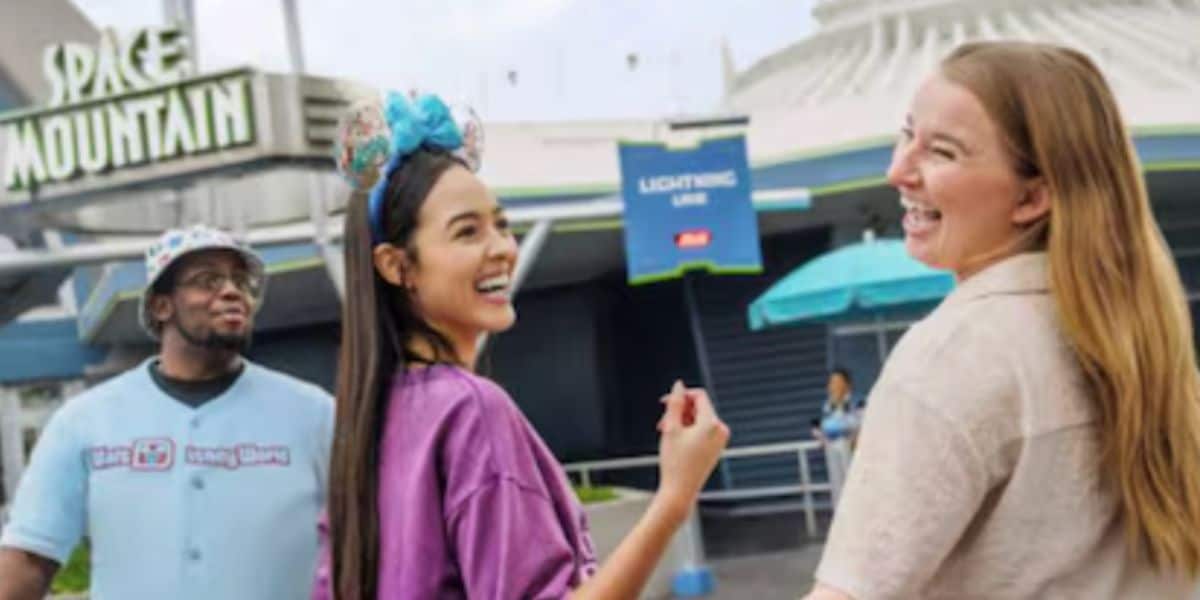
After some serious issues and ongoing concerns behind the scenes, Space Mountain may be facing a crossroads at Walt Disney World. Disney hasn’t made any sweeping announcements. There’s no flashy concept art floating around. But when you spend enough time in the parks, you start to sense when an attraction is being quietly evaluated instead of confidently protected.
And right now, it feels like Space Mountain’s future is no longer untouchable.
The Ride That Defined Tomorrowland
Before we get too far ahead of ourselves, it’s important to remember what Space Mountain actually represents.
When it opened at Magic Kingdom in 1975, Space Mountain wasn’t just another roller coaster. It was the roller coaster. Fully enclosed. Completely in the dark. Soundtrack pumping. Stars streaking past. For decades, this ride defined what “thrill” meant at Walt Disney World.
Even today, the experience still carries a certain magic. Guests step into that dimly lit queue, wind through the futuristic corridors, and board a small rocket ship that feels surprisingly intimate compared to modern coaster trains. Then the lift hill clicks upward, and suddenly you’re hurtling through pitch black space with only brief flashes of light guiding your way.
There’s something undeniably classic about it. It’s not flashy. It doesn’t rely on screens. It’s pure track, darkness, and imagination. For many longtime fans, it’s a rite of passage.
But nostalgia can only carry a ride so far.

A Classic Showing Its Age
Let’s be honest: Space Mountain doesn’t feel new anymore.
Compared to modern attractions like Guardians of the Galaxy: Cosmic Rewind at EPCOT, the difference is impossible to ignore. Cosmic Rewind uses a smooth launch system, rotating ride vehicles, immersive storytelling, and cutting-edge technology. Space Mountain, by contrast, still relies on a decades-old track layout and lift hill.
And then there’s the ride quality.
Guests frequently describe Space Mountain as jerky and rough. The tight turns feel abrupt. The transitions aren’t exactly fluid. While some fans defend the rattling as part of its charm, others quietly admit they brace themselves before every sharp curve.
It’s not just about comfort. It’s about comparison. When Disney builds something new today, it uses a smooth-ride system. They built it cinematically with a layered story. Space Mountain, while iconic, feels mechanically dated next to the company’s current thrill standards.
That doesn’t mean it’s broken. But it does mean it stands out — and not always in a flattering way.
And that’s where the bigger question begins to form.

The IP Question Disney Can’t Ignore
Disney has made one thing very clear over the past decade: recognizable intellectual property drives investment.
We’ve watched original attractions get reworked into branded experiences across the parks. Splash Mountain became Tiana’s Bayou Adventure. The Great Movie Ride made way for Mickey & Minnie’s Runaway Railway. Even beloved classics aren’t immune if Disney sees a stronger franchise opportunity.
Space Mountain, for all its history, is still technically an original concept. It doesn’t tie directly to Star Wars, Marvel, Pixar, or any of Disney’s billion-dollar film franchises.

In an era where synergy matters, that’s a vulnerability.
Tomorrowland itself has already shifted toward more recognizable brands. Buzz Lightyear’s Space Ranger Spin anchors one side. The nearby Tron Lightcycle / Run leans heavily into a film property. Across the parks, Disney continues to fold attractions into established universes whenever possible.
So, how long does Space Mountain remain protected simply because it’s Space Mountain?
Disney loves its legacy. But it also loves refresh cycles, new marketing pushes, and attractions that sell merchandise before guests even exit the ride.

If Space Mountain Changes, What Comes Next?
If Disney ever decided to retire, retheme, or fully rebuild Space Mountain, several realistic options could take its place:
-
A Star Wars Coaster Experience
A high-speed X-wing or TIE fighter indoor coaster would instantly anchor Tomorrowland in one of Disney’s strongest franchises. The enclosed building could easily transform into a space battle simulator with modern projection, lighting, and launch technology. -
Another Guardians of the Galaxy Attraction
Given the massive success of Cosmic Rewind, Disney could expand the Guardians’ presence with a different storyline or villain. A sister coaster using similar ride systems would guarantee strong demand from day one. -
A Buzz Lightyear or Alien-Themed Thrill Ride
Pixar’s Toy Story universe offers family-friendly branding with built-in merchandise power. A revamped indoor coaster centered on Buzz or the Little Green Aliens could update the thrill level while keeping it accessible. -
A Fully Reimagined Space Mountain
Rather than removing it, Disney could rebuild the attraction with a smoother track layout, updated ride vehicles, onboard audio, and enhanced lighting effects. Tokyo Disneyland’s evolving version proves the concept can modernize without losing its identity.
Each of these options keeps Tomorrowland in the sci-fi lane while aligning the park with Disney’s current strategy of blending thrill with recognizable storytelling.
A Crossroads for a Legend
None of this guarantees that Space Mountain is going anywhere tomorrow.
Disney understands the emotional connection guests have with this ride. Generations have ridden it. Parents introduce it to their kids. It’s part of the Magic Kingdom skyline. Removing it outright would send shockwaves through the fan community.
But Disney also operates with a long-term strategy in mind. Infrastructure ages. Technology advances. Guest expectations rise. And when an attraction begins to feel noticeably behind the curve, conversations happen.
Space Mountain now sits at that intersection.
Does Disney protect it as a sacred original? Does it retrofit it with modern tech? Or does it eventually leverage one of its powerhouse franchises to reshape Tomorrowland entirely?
For now, the dome still glows at night. Rockets still launch into the dark. But the questions feel louder than they used to.
And when Disney starts weighing the future of a legend, change tends to follow.