

 Credit: Disney
For decades, Walt Disney World has been hailed as the global gold standard for vacationing with food allergies. From Celiac disease to severe nut allergies, families have flocked to the Orlando resort specifically because they felt safe. However, a significant change to the My Disney Experience app and the official Disney website has left the allergy community confused and concerned.

As of February 2026, Walt Disney World has officially removed the ability for guests to select food allergies during the Advanced Dining Reservation (ADR) booking process.
This unexpected shift in the digital interface has sparked a massive debate among frequent park-goers: Is Disney streamlining its technology, or is this a step backward for guest safety? Here is everything you need to know about the new dining reservation flow and how to stay safe on your next trip.
The End of the “Allergy Checkbox”
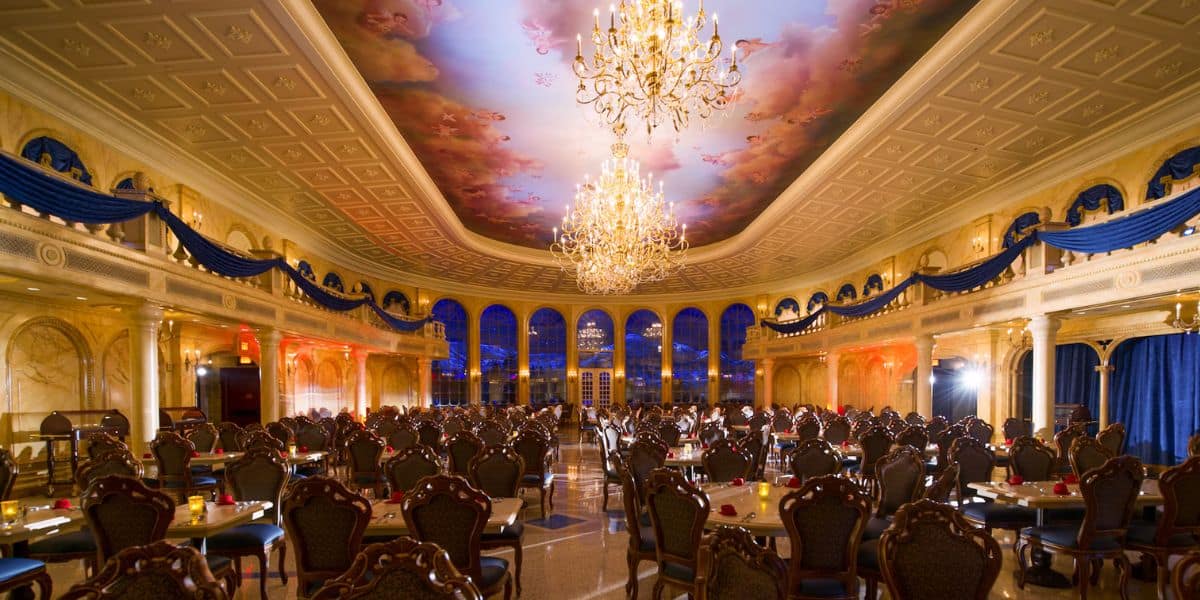
Until recently, the process of booking a table at a Disney World restaurant included a critical step for many families. After selecting a time and date for a meal at icons like Be Our Guest or Le Cellier, guests were presented with a “Special Dietary Requests” section.
This section allowed users to check boxes for the most common allergens, including:
- Gluten/Wheat
- Egg
- Fish/Shellfish
- Milk/Dairy
- Peanut/Tree Nut
- Soy
Once selected, this information was tied to the reservation, appearing on the server’s ticket and alerting the kitchen before the guest even sat down. As of this week, that entire section has vanished from the initial booking flow. When making a reservation online or through the app, the interface now skips the allergy selection and moves directly from party size and time selection to the credit card guarantee.
Why the Change? Speculation vs. Reality
Disney has not officially issued a “State of the Union” regarding why this feature was removed, but industry experts and long-time travel planners have a few theories.
1. Forcing the Conversation for Safety
The primary theory is that Disney wants to prevent a “false sense of security.” In the past, some guests may have believed that checking a box on an app months in advance was enough to guarantee a safe meal. By removing the digital selection, Disney is essentially forcing guests to advocate for their safety in person.
Food allergies are highly specific and can change over time. By requiring guests to speak directly with a server or a chef upon arrival, Disney ensures that the information is up to date and that the kitchen is aware of the specific severity of the allergy (e.g., cross-contamination risks versus simple ingredient avoidance).
2. Streamlining the App Interface
Under the leadership of Josh D’Amaro, Disney has been on a quest to “simplify” the digital experience. The My Disney Experience app has often been criticized for being “bloated” and prone to glitches. Removing steps from the reservation process may be part of a broader effort to make the ADR system faster and more stable, especially during the high-stress “60-day window” when thousands of guests are trying to book popular spots simultaneously.

3. Reducing Data Liability
Storing sensitive medical and dietary information for millions of guests carries a level of data liability. By moving this information to a “per-visit” conversation rather than storing it in a reservation system, Disney may mitigate the risks associated with data management.
The Anxiety of the Allergy Community
For many, this change isn’t just a digital update; it’s a source of genuine anxiety.

“I used to feel a sense of relief seeing ‘Gluten Allergy’ printed on my reservation confirmation,” says one frequent visitor and Celiac advocate. “It felt like Disney already had my back before I walked through the door. Now, it feels like I’m starting from zero every time I sit down to eat.”
For parents of children with life-threatening anaphylactic allergies, the checkbox was a layer of redundant safety. The worry now is that in a high-volume, high-stress restaurant environment, a server might forget to ask, or a guest might be too overwhelmed to bring it up immediately.
How to Navigate Disney Dining with the New System
If you have a trip planned for 2026, don’t panic. Disney’s commitment to allergy safety is still very much intact; only the communication method has shifted. Here is your step-by-step guide to dining safely at Disney World under the new rules.

1. Use the Mobile Check-In Notes
While the allergy selection is removed from the booking stage, it may still appear during the Mobile Check-In process on the day of your reservation. When you are within range of the restaurant and tap “Check In” on your phone, look for the “Special Requests” or “Dietary Needs” section there. This is a much more “real-time” way to alert the staff.
2. The “Host Stand” Reminder
When you arrive at the restaurant, confirm your dietary needs with the cast member at the host stand. They can often add a “flag” to your table assignment that alerts the server immediately.

3. The Server Conversation (Mandatory)
This is the most important step. Even if you checked a box during mobile check-in, you must tell your server as soon as you are seated. Disney servers are trained to ask, “Does anyone in the party have a food allergy?” If they don’t ask, be sure to speak up immediately.
4. Request to Speak with a Chef
One of the best perks of Disney dining is that at any Table Service restaurant, you have the right to speak directly with a chef or a specially trained manager. If you have multiple allergies or a high risk of cross-contamination, ask your server: “Could I speak with a chef about my dietary needs?” They will happily bring a chef to your table to discuss what can be safely prepared for you.

5. Review the Allergy-Friendly Menus
Most Disney restaurants now have dedicated Allergy-Friendly Menus. These menus are broken down by allergen (e.g., “Safe for Milk Allergies”). Even without the checkbox on your reservation, these menus are available at every location and provide a clear guide on what the kitchen is prepared to handle.
A Legacy of Safety in a Changing World
It is important to remember that Disney World remains one of the safest places in the world for those with dietary restrictions. While removing the ADR checkbox feels like a loss of convenience, it does not necessarily signal a loss of quality.

Disney kitchens are still equipped with separate fryers for gluten-free items, purple “allergy picks” to identify safe plates, and staff who undergo rigorous food safety training.
However, this change places the burden of advocacy firmly on the guest. For the “Allergy Parents” of the world, the message is clear: You can still have a magical—and safe—meal, but you’ll need to use your voice rather than your thumb to make it happen.
Final Thoughts for 2026 Travelers
As Walt Disney World continues to evolve its technology, guests should expect more changes to the My Disney Experience interface. The removal of the allergy selection is a reminder that while the app is a tool, it is not a replacement for human interaction and self-advocacy.
If you are concerned about a specific dining location, you can still contact Disney Special Dietary Requests via email (Special.Diets@DisneyWorld.com) at least 14 days before your arrival. While they no longer “note” individual reservations, they can provide ingredient lists and peace of mind for those with complex needs.
Do you think Disney made the right call by removing the allergy selection to force more in-person communication, or is this a significant inconvenience for families? Let us know your thoughts in the comments below!