
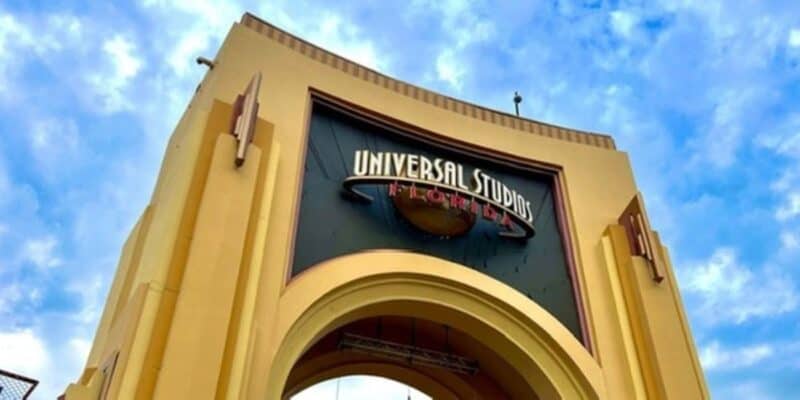
 Credit: Sarah Larson, Inside the Magic
In just one day, Universal Orlando Resort is expected to unveil an announcement that could quietly—but significantly—redefine what Universal Studios Florida represents.
While the company has not yet confirmed any details, a recent teaser posted on Universal Orlando’s social media channels has set off widespread speculation. The image showed a sleek speedometer with needles climbing and an odometer reading “012026,” which many fans quickly interpreted as January 20, 2026. With no caption or explanation attached, the post felt deliberate, measured, and designed to signal something larger than a routine attraction update.
01.20.26 pic.twitter.com/Nlm8k1ENwX
— Universal Orlando Resort (@UniversalORL) January 17, 2026
And that’s exactly why this moment feels different.
Rather than teasing a single new ride, the messaging suggests a broader shift—one that may mark the end of Universal Studios Florida’s long-standing identity and the beginning of a new era for the park.
Universal Studios Florida Has Been Quietly Moving Away From Its Roots
For much of its history, Universal Studios Florida positioned itself as a working studio park. Guests once experienced production tram tours, behind-the-scenes exhibits, and attractions built around the idea of movie-making itself.
Over time, that identity has steadily faded.
Soundstages were removed. Studio-themed experiences disappeared. Screen-based rides and production-centric attractions gave way to large-scale thrill rides and immersive intellectual property–driven lands.
Today, the park is defined far more by high-energy attractions like Harry Potter and the Escape from Gringotts, Revenge of the Mummy, Transformers: The Ride–3D, and The Bourne Stuntacular than by anything resembling a functioning studio.

In practice, Universal Studios Florida is no longer a “studio park” in any meaningful sense. It has evolved into a thrill-forward, franchise-driven theme park that simply retains the “Studios” name for legacy reasons.
That is why the January 20 announcement feels so consequential. It may represent the moment Universal formally acknowledges what the park has already become.
The Speedometer Teaser and Why Fans Are Reading Into It
The design of the teaser image was strikingly specific.
A speedometer. Rising needles. An odometer reading “012026.” A strong visual association with racing, velocity, and acceleration.
To fans, the implications were immediate.
The imagery closely aligns with the Fast & Furious franchise. At the same time, Universal Studios Florida is already constructing a major new roller coaster following the permanent closure of Hollywood Rip Ride Rockit. Meanwhile, Universal Studios Hollywood is preparing to debut a brand-new Fast & Furious–themed coaster.
Taken together, the clues point to one dominant theory: Universal Orlando is preparing to announce a new Fast & Furious attraction—likely a high-speed coaster—and potentially retire Fast & Furious: SuperCharged in the process.

Fast & Furious: SuperCharged Remains a Lingering Weak Point
Few attractions at Universal Orlando have struggled with reputation as much as Fast & Furious: SuperCharged.
Despite being based on a blockbuster franchise, the ride has consistently ranked near the bottom of fan polls and online attraction rankings. Guests frequently describe it as underwhelming, awkwardly paced, and disconnected from the energy and tone of the films it is meant to represent.
The attraction debuted with high expectations and failed to meet them. Over time, Universal made only minimal changes, leaving the experience largely intact despite widespread criticism.
As a result, SuperCharged has come to symbolize a broader issue inside Universal Studios Florida: outdated attractions that no longer align with the park’s current direction.
This is why fans are approaching the January 20 announcement with cautious optimism. A new Fast & Furious coaster would be a major improvement—but only if it also marks the end of SuperCharged.
Why a New Fast & Furious Ride Alone May Not Be Enough
Even among fans who welcome the idea of a new Fast & Furious coaster, enthusiasm is tempered by a larger concern.
Would replacing one Fast & Furious attraction with another truly address Universal Studios Florida’s underlying identity problem?
On its own, probably not.
The park already feels like a collection of high-profile franchises that do not always form a cohesive whole. Adding another major IP ride helps modernize the lineup, but it does not necessarily redefine the park’s long-term vision.
That is why many fans believe the announcement must go further than simply introducing a new attraction.
If Universal intends for January 20 to represent a genuine turning point, it would need to clearly signal that SuperCharged is permanently closing and that broader changes are coming to the park’s aging infrastructure.
Without that clarity, the announcement risks being perceived as incremental rather than transformative.
The Role of Rip Ride Rockit’s Closure in This Transition
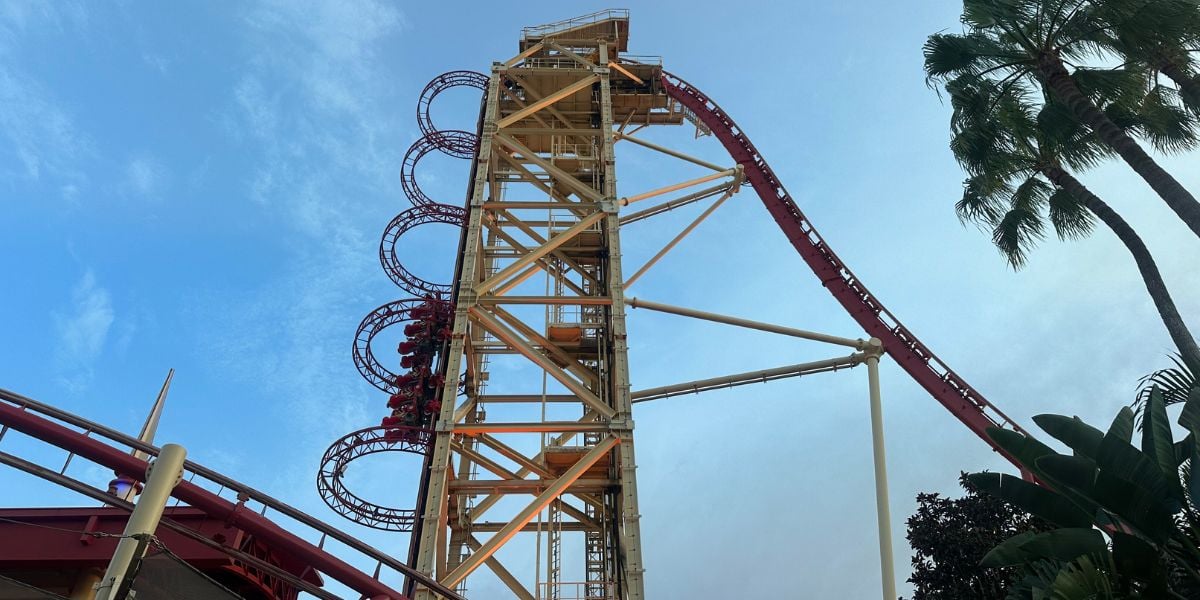
The permanent closure of Hollywood Rip Ride Rockit quietly removed one of Universal Studios Florida’s most recognizable visual landmarks.
For years, the coaster dominated the park’s skyline and served as a symbolic anchor for the park’s thrill identity. Its absence is already reshaping how guests experience the front half of the park.
The new coaster replacing it is widely expected to be larger, faster, and more technically advanced. That development alone pushes Universal Studios Florida further into modern thrill-park territory.
When viewed alongside the rumored Fast & Furious changes, it becomes easier to see January 20 as more than a single-ride reveal. It begins to resemble a strategic reset.
January 20 Feels Like a Strategic Inflection Point
Universal has spent the last decade moving toward a more aggressive, IP-driven, thrill-focused model.
The success of The Wizarding World of Harry Potter, VelociCoaster, and newer coasters across the resort has reinforced that strategy. At the same time, older attractions that no longer resonate with guests have increasingly stood out as liabilities.
From that perspective, January 20 may represent the moment Universal formally commits to that direction.
Not just by adding something new—but by removing something that no longer works.

What Would Make This Announcement Truly Meaningful
For many fans, the announcement will only feel significant if Universal does more than reveal a new ride concept.
A meaningful shift would likely include:
-
Confirmation that Fast & Furious: SuperCharged is permanently closing
-
A clear replacement plan rather than a simple retheme
-
Positioning the new attraction as part of a broader transformation of Universal Studios Florida
-
Acknowledgment that additional outdated attractions may be next
Without those elements, the reveal may feel like a missed opportunity to address deeper issues inside the park.