 13
13
 Credit: Lucasfilm
The Acolyte Season 2 was poised to pull back the curtain on some of the most secretive corners of Star Wars lore, but the story came to a halt before those plans could reach the screen.

Set generations before the Skywalker saga, The Acolyte carved out space in the High Republic era, a period never depicted in live action. Developed by Leslye Headland, the Disney+ series examined the Jedi at the height of their influence while tracing the earliest movements of Sith-aligned forces. Rather than presenting the Force in simple terms, the show leaned into philosophical divides and moral gray areas.
The series quickly became one of the most debated Star Wars projects in recent memory. Similar to the reaction cycle surrounding Star Wars: Episode VIII—The Last Jedi (2017), online conversations intensified week to week as fans weighed in on mythology changes, character arcs, and thematic direction.

Even with a cast that drew praise and a narrative that took large swings, the eight-episode run ended without renewal. Trade reporting pointed to soft viewership performance as the primary reason The Acolyte did not move forward.
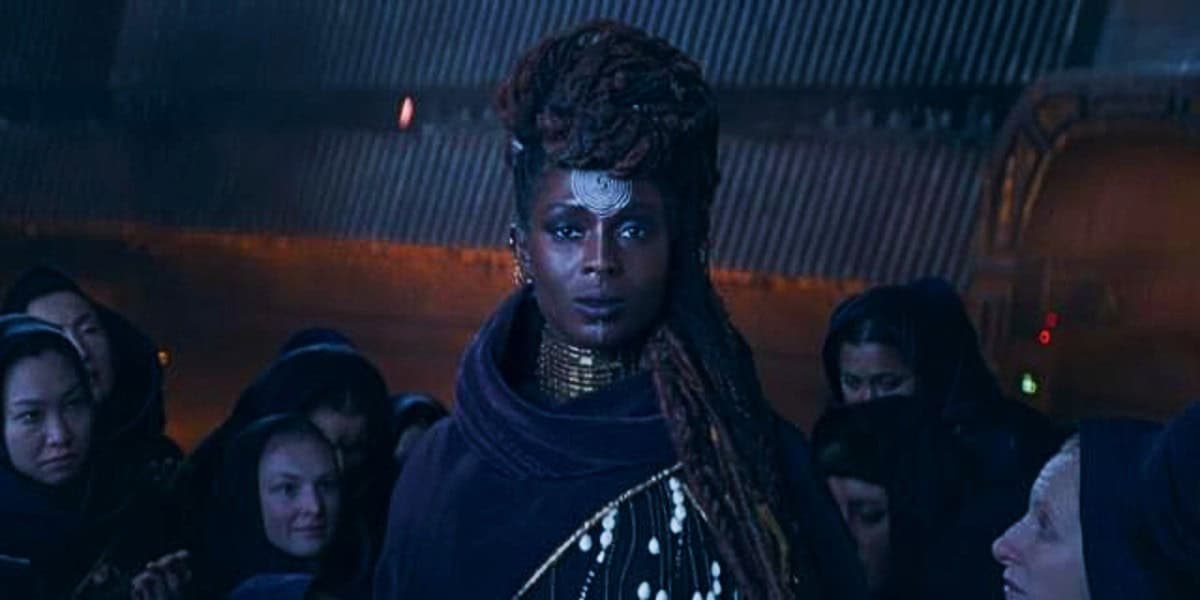
Still, many viewers argued the cancellation reflected sustained online criticism aimed at the show’s themes and performers–including Amandla Stenberg (Osha/Mae Aniseya), Lee Jung-jae (Jedi Master Sol), Manny Jacinto (Qimir/The Stranger), and Jodie Turner-Smith (Mother Aniseya).
From its earliest announcement, The Acolyte stood out as a female-led Star Wars story guided by Headland, a queer showrunner, and powered by a diverse ensemble. Supporters praised the series for widening the saga’s perspective, while critics in some online circles dismissed it as “woke” and overly focused on social themes.
Disney Entertainment co-chairman Alan Bergman later indicated that the show’s scale and cost made a follow-up season difficult to justify. However, third-party analytics later suggested audience demand may have been stronger than initial internal metrics showed.
According to tracking data, The Acolyte outperformed Obi-Wan Kenobi, The Book of Boba Fett, and Dave Filoni’s Ahsoka in certain demand measurements, indicating that budget math–not just reception–factored heavily into the final decision.
Had Season 2 gone ahead, it would have continued digging into character backstories and unresolved plot threads–many of which have since been expanded through official companion material. Details compiled in “Star Wars: The Acolyte Visual Guide” confirm several long-speculated elements of Qimir’s history.

The Season 1 finale briefly featured a shadowy Sith figure identified as Darth Plagueis on Qimir’s storm-lashed homeworld. The guide describes the planet as containing “an intelligent reptilian species that lives far from the islands.”
Observers and outlets such as The Holo Files (via The Direct) have connected this world to Bal’demnic from Star Wars Legends–the same planet where Darth Plagueis once eliminated Darth Tenebrous. The presence of cortosis deposits there, a rare metal resistant to lightsabers, also lines up with Qimir’s unusual armor design.
The same reference book expands on Qimir’s criminal ties, stating he “spent some time gunrunning in Hutt Space,” territory ruled by the Hutt Clan, including Jabba the Hutt. That detail reframes the character as more calculating and dangerous than his calm surface presentation suggests.

Qimir’s age is officially listed as “unknown,” deepening speculation around his timeline. Notes about his work with advanced compounds–including “a rare nori-inkal from Boothi IV” and “an oily serum that revitalizes aged skin and eliminates wrinkles”–hint he may have significantly extended his lifespan.
His Sith credentials are also left intentionally unclear. The guide labels him “a pretender to [Sith] lineage… Whether he is the true heir to the Sith is a mystery no one will survive to solve.” His helmet, meanwhile, is described as purely “cosmetic,” meaning he relies entirely on the Force rather than sight when fighting.

New material tied to the upcoming art book “The Art of Star Wars: The Acolyte (Season One)” (2026) further connects Qimir to later saga developments–including an unexpected bridge to the sequel trilogy. If continued, the series would have clarified how central Qimir/The Stranger might have been to the saga’s future timeline.
“It was in the design of the character, as well as knowing that we were going to introduce Darth Plagueis, who has to end up with Palpatine as his apprentice,” Leslye Headland said in the book.
“Following the Rule of Two–a precept that limited the Sith to just two at any given time, a master and an apprentice–one way to keep it going is if the Stranger is the first Knight of Ren, part of a Sith-adjacent cult that we know eventually survives.”

That thread ties directly into an area of sequel-era mythology that received limited on-screen explanation. Now, more information has come to light through a deeper analysis of the art book dedicated to The Acolyte‘s first season.
“The slight frill at the back of the helmet–a design element that dates back to the franchise’s samurai influence and notably first seen in Vader’s design–hints at a link between the Stranger and the Star Wars sequel trilogy’s masked antagonist Kylo Ren, an idea storytellers took from the design,” artist Nick Tyrel explains in Baver’s book (via The Holo Files).
In addition to her comments on Qimir’s design and how that foreshadows the Knights of Ren, Leslye Headland’s comments were expanded in the Holo Files report. The creator alluded to Qimir being the first Ren, meaning the second season of The Acolyte was on track to retcon the sequel trilogy–just as other media has done in the years since the trilogy concluded in 2019.
“And since we never name him,” Headland explains, “you don’t know: Does he have a first name, and then his last name is Ren? Is he the original Ren? It’s a good way to nod to it without having to give away too much information.”

The Knights of Ren remain one of the more mysterious dark side groups introduced in modern Star Wars. First referenced in Star Wars: Episode VII—The Force Awakens (2015) and later shown in Star Wars: Episode IX—The Rise of Skywalker (2019), they operate outside traditional Sith structure, embracing a harsher, instinct-driven interpretation of the Force.
The title “Ren” refers to a dark side philosophy centered on raw will and destruction rather than doctrine. Before Ben Solo joined them, the group followed a leader known simply as Ren, who wielded a red lightsaber built from a broken hilt. They traveled as raiders, leaving devastation in their wake.
After Luke Skywalker’s Jedi Temple fell, Ben Solo assumed the name Kylo Ren and took control of the faction, deploying them as elite operatives during the First Order’s rise.

In The Rise of Skywalker, the Knights serve Kylo Ren until he returns to his identity as Ben Solo, at which point they turn on him and are ultimately defeated on Exegol.
Expanded material goes further. The comic series “Star Wars: The Rise of Kylo Ren” (2019–2020) by Charles Soule and Will Sliney details the group’s beginnings and Ben’s path into their ranks, including his confrontation with the original Ren and his eventual takeover. Additional guides and novels add context, depicting the Knights as proof that dark side traditions evolve rather than disappear.
Though they have yet to appear in animation, their influence echoes through newer stories that examine emerging dark side cults–including The Acolyte. Those parallels suggest intentional connective tissue across eras. References to the Knights within The Acolyte now appear far more deliberate in hindsight.

Despite divided reactions, The Acolyte connected with a sizable segment of the audience through its character-driven drama and ethical tension. Its focus on Osha and Qimir, criticism of Jedi institutional blind spots, and the live-action arrival of Darth Plagueis added new dimensions to franchise canon.
With the series finished, the Star Wars live-action streaming lineup is comparatively sparse. Ahsoka Season 2 remains the only confirmed show currently in production, targeting a 2026 debut. Reports indicate Dave Filoni is structuring the season so it can function as a conclusion if a third installment does not materialize.

On the film side, Star Wars is preparing its theatrical return with The Mandalorian and Grogu this year–the first feature release since The Rise of Skywalker almost seven years ago. The movie is expected to serve as either a continuation or a replacement for a fourth season of The Mandalorian and to help set up Filoni’s long-gestating crossover storyline (which might not actually happen as a movie after all).
Shawn Levy’s Star Wars: Starfighter is scheduled for May 2027. Beyond that, the release calendar is still taking shape. Simon Kinberg is developing a new trilogy, though it remains unclear whether it will intersect with Sharmeen Obaid-Chinoy’s delayed Rey-focused “New Jedi Order” film or stand apart.

For now, The Acolyte stands as a bold, short-lived chapter in Star Wars–one that opened major story doors and left many of them unanswered. The mythology it introduced continues to ripple outward, even without a second season.
What’s your take on Star Wars continuing to push context upon the polarizing sequel trilogy? Let Inside the Magic know in the comments.