 Credit: Disney
Did you know that there’s one rule for Disney characters that performers keep breaking? A former Walt Disney World Resort entertainment cast member recently spoke out about the policy and other protocols for character performers in a TikTok video.
At Disneyland Resort and Walt Disney World Resort, character performers are separated into two categories: “face” and “fur.” Fur characters, like Mickey Mouse and Donald Duck, don’t speak. They may make kiss noises (or slobber noises, if they’re Stitch!), but otherwise, they use body language to communicate with guests. Face characters, such as Cinderella or Peter Pan, can verbally communicate with guests in the style of their movie counterparts, but they still adhere to strict rules about what they’re allowed to say.

Disney maintains something called “character integrity,” which means that children should always feel like they’re meeting the “real” version of their favorite on-screen star. One former Walt Disney World Resort entertainment cast member, Morgan DeVore (@morgandevore97 on TikTok), recently shared a video detailing some of the rules that the parks enforce for characters interacting with guests.
@morgandevore97 5 things that Disney characters are NOT allowed to do from a former character. Did any of these surprise you?? I’m so curious ✨ #disneycharacters #disneycharacter #disneyperformer #disneyadult #disneyadult
Rule #1
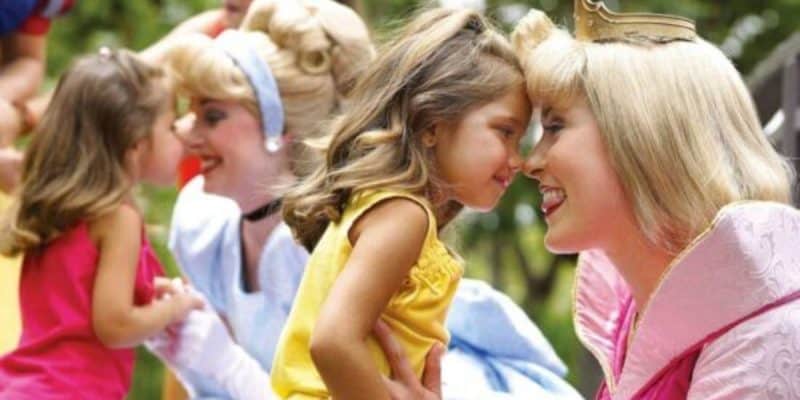
The first of the five rules DeVore shared was that Disney character performers are not allowed to pick up children. Characters can sit on the ground and allow young guests to lean on them, hug them, or sit in their lap, but for everyone’s safety, they cannot carry or lift them.

“We cannot be standing holding your child,” the former Disney cast member explained. “Some people get really upset about this. It’s really just for their own safety. In case anything were to happen, we don’t want to be held liable.”
Rule #2
One of the most surprising policies DeVore shared was that characters are not allowed to touch the top of Disney Park guests’ heads.
“That might be silly, but sometimes when little kids come around, you kind of think about touching the top of their head,” she said. “I think it’s just kind of a thing of like, you don’t know if they have lice or anything like that in their hair.”

Lice would not only be a health hazard for character performers and other guests, but could also infest wigs, costumes, and other delicate, expensive wardrobe pieces.
In the comments, several Disney Parks fans pointed out additional reasons that the company might have this policy.
“It’s taboo in many cultures to touch the top of heads,” said @aunt_fox.

“It’s a very demeaning gesture in general,” @_do.not.care_ agreed. “I’m from the Southern US and I was raised to never touch or pat someone else on the top of their head because it’s rude.”
“Top of guest’s heads reason: terminally ill (or other) people may have lost their hair and can be wearing a hairpiece,” @orlandoweddingdj added. “Could cause embarrassment or even a liability.”
Rule #3
“The third one is that, in pictures, we have to have our hands showing at all times,” DeVore continued. “Now, that doesn’t necessarily mean you have to see both hands…You can have one hand that’s on the top of their back, but then your other hand needs to be showing.”
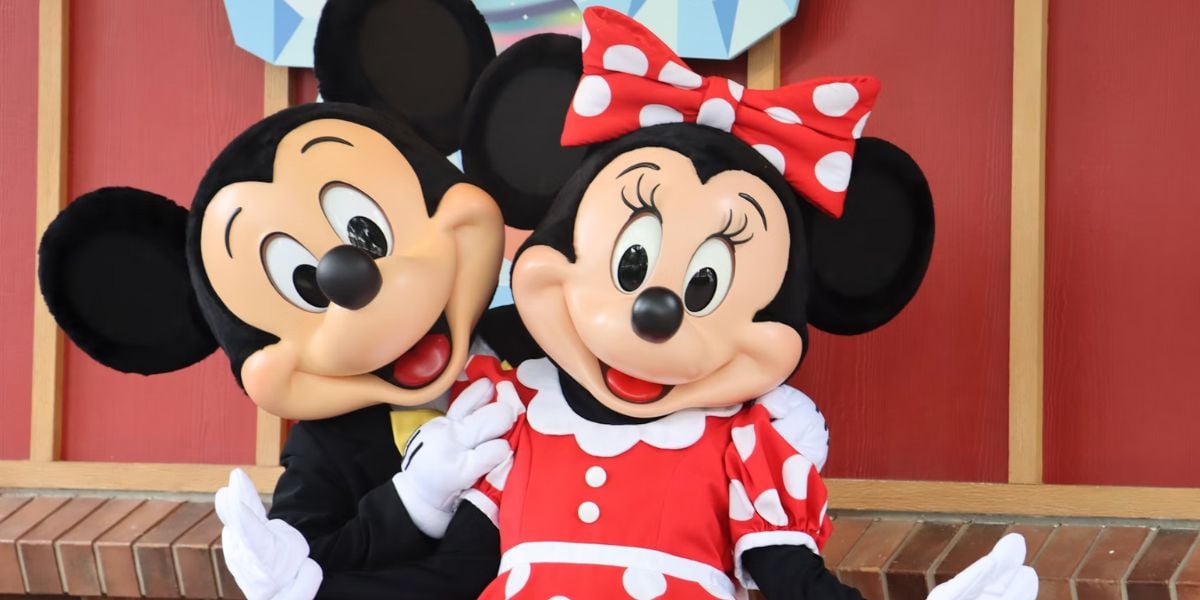
Disney even recommends poses for each character that fit with their personality or story while still keeping at least one hand exposed.
“This is really to protect the character,” the former Disney employee explained. “If someone were to say that a character touched them inappropriately, or something happened, we can go back and look at that picture and tell them, either it did, or it didn’t happen.”
Rule #4
Disney characters are also not allowed to be in proposal photos. They can celebrate with their guests afterward, but are instructed to avoid appearing in front of a guest on one knee so that it doesn’t appear as though they’re the ones accepting the ring.

“I would advise if you really do want to incorporate a certain character into your proposal, just tell the character attendant about it,” DeVore said. “We can 100% make that happen for you, but it just cannot look like the character is getting proposed to because it’s all about character integrity and keeping that magic alive.”
Rule #5
The final rule DeVore shared is frequently broken, to the extent that videos of these forbidden character interactions often go viral on social media.
“This might be a little contradictory to what you’ve seen before, but I distinctly remember in my training, we were not allowed to speak another language or do sign language,” the former Disney cast member said.

Countless videos have gone viral showing both face and fur characters speaking sign language with young Disney Park guests. Many cast members even report seeing those videos during their onboarding training experience, known as “Traditions.” However, speaking sign language or another language with a guest is still technically forbidden under Disney’s character protocols.
“Again, that really falls under the umbrella of character integrity…,” DeVore continued. “At the end of the day, we are there to serve the kids, but at the same time, let’s hypothetically say that later, that kid comes and meets Tinker Bell again, and it’s a different ‘friend…’ that doesn’t know sign language, or speak the other language, that ruins the integrity.”

Walt Disney World Resort and Disneyland Resort have made some minor changes in recent years, allowing bilingual characters like Mirabel from Encanto (2021) to converse with guests in limited Spanish. However, the company hasn’t indicated that it plans to loosen the policy any further.
Should Disney change this rule about characters speaking other languages? Share your thoughts with Inside the Magic in the comments!