 3
3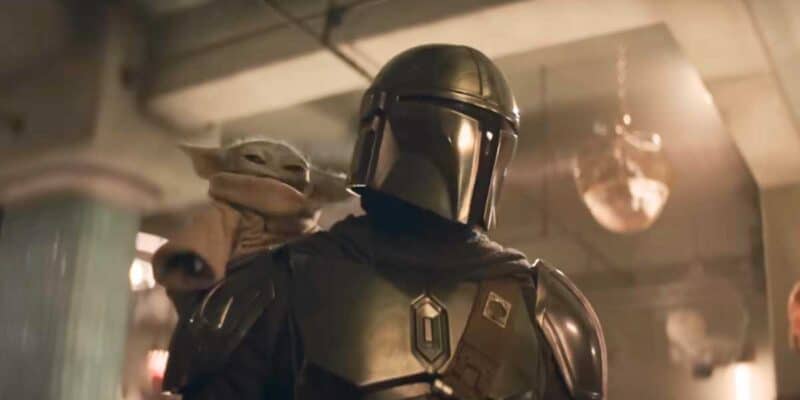
 Credit: Lucasfilm
Next year will be a historic moment for The Walt Disney Company and Lucasfilm, as the beloved Star Wars franchise officially returns to cinemas, almost seven years after audiences were divided over J.J. Abrams’ sequel trilogy conclusion, Star Wars: Episode IX–The Rise of Skywalker (2019).

The Mandalorian and Grogu: How the Theatrical Release Transforms the Beloved Series
When The Mandalorian premiered on Disney+ in 2019, it introduced audiences to a gritty, morally ambiguous bounty hunter navigating the lawless fringes of a post-Empire galaxy. Din Djarin operated in shades of gray, taking jobs for credits rather than causes, embodying the kind of anti-hero Star Wars had rarely explored in its theatrical releases.
That foundational premise—a mysterious gunslinger with a muddy past pursuing bounties across the Outer Rim—became the series’ identity, offering viewers something refreshingly different from the franchise’s typical hero narratives.
Now, as Lucasfilm prepares to bring Din Djarin and his pint-sized companion to theaters on May 22, 2026, that original character concept is being deliberately left behind.
The Mandalorian and Grogu, directed by Jon Favreau and produced by Favreau, Kathleen Kennedy, Dave Filoni, and Ian Bryce, represents a fundamental departure from the show’s initial vision, transforming the armored mercenary into something the series was specifically designed to avoid: just another hero fighting for the good guys.

From Hired Gun to Republic Recruit
The shift became explicit at the end of the Disney+ series’ third season, when Din Djarin voiced his evolving worldview. “I don’t want to go out there and just be a hired gun. I want to work for the good guys,” he declared, effectively abandoning the neutral, credit-motivated approach that defined his character for most of the three seasons.
Creator Jon Favreau has confirmed this philosophical transformation will anchor the theatrical release, marking a complete reversal of the show’s original promise.
“One of the last things we say [in Season 3] is, like, ‘I don’t want to go out there and just be a hired gun. I want to work for the good guys,’” Favreau told Empire Magazine.
This evolution contradicts everything Lucasfilm marketed when The Mandalorian first launched. The series was built entirely around following a mysterious bounty hunter operating outside traditional allegiances, someone whose moral compass pointed toward survival and personal codes rather than galactic politics.
The episodic structure of early seasons reinforced this identity, with Din taking on various jobs each week—some morally questionable, others accidentally noble—while maintaining his essential independence.
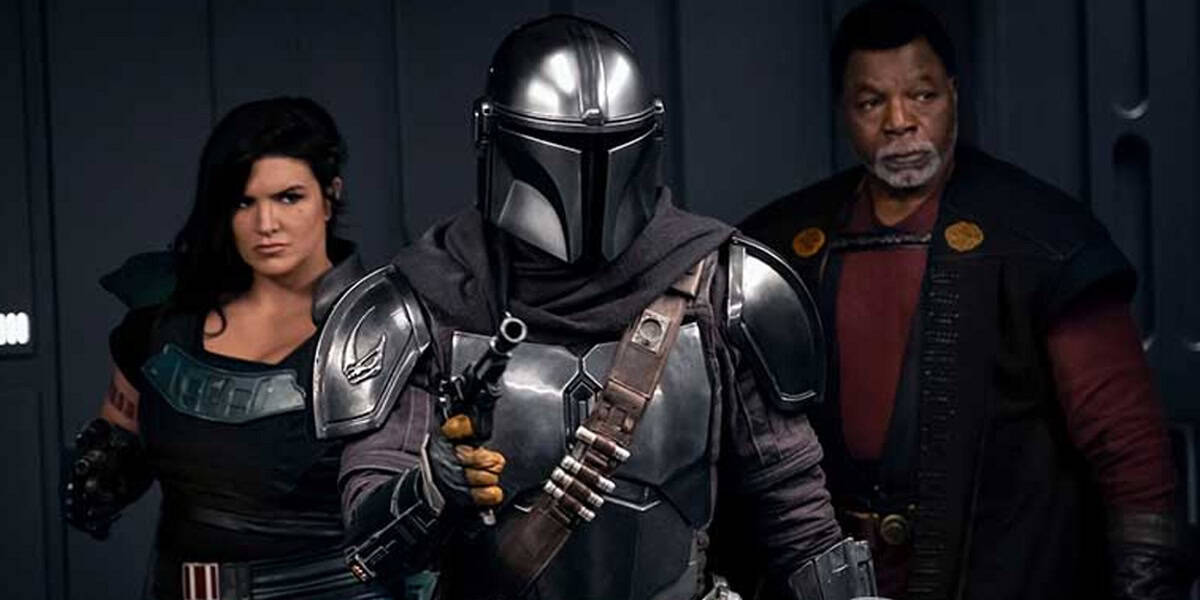
The theatrical version eliminates that ambiguity entirely. Rather than continuing to explore the complicated life of a freelance operative in a destabilized galaxy, the film repositions Din as a recruited agent of the New Republic.
The official synopsis makes this explicit: Din Djarin and Grogu are enlisted to help protect what the Rebellion fought to establish, tracking down and neutralizing dangerous Imperial warlords threatening the fragile new government.
This transformation matters because it fundamentally alters the character’s dramatic potential. A bounty hunter working for the highest bidder can find himself on either side of any conflict, creating unpredictable story opportunities and moral complexity.
A hero explicitly fighting for the good guys follows a more traditional trajectory, one that fits comfortably within Star Wars’ established heroic framework but sacrifices the distinctive edge that made The Mandalorian feel fresh.

The change also impacts how audiences understand Din’s journey. His reluctant progression from isolated mercenary to protective father figure worked precisely because he maintained his professional identity while developing emotional connections.
Now the character fully embraces conventional heroism, completing an arc that some fans celebrate as natural growth while others view as abandoning what made the series special in the first place.
Grogu’s Power Amplification
While Din undergoes a philosophical transformation, his young apprentice faces a more tangible change that could dramatically reshape his capabilities. According to a leaked synopsis, Grogu discovers an ancient artifact during the film’s events that functions as an amplifier for his Force abilities.
This development promises to deliver a version of the character significantly more powerful than the one audiences have followed across three seasons of television.

The discovery reportedly occurs when Din and Grogu infiltrate a nearly forgotten Imperial facility on the planet Khar’Zuun. While tracking down scattered Imperial commanders who have become dangerous warlords, they uncover clues leading to this location, where Grogu encounters the mysterious device.
The artifact’s nature and origins remain unclear, but its function is straightforward: it enhances the young Force user’s already considerable abilities.
This plot development raises immediate questions about how dramatically Grogu’s powers will expand. Throughout the Disney+ series, his Force capabilities were impressive but limited by his youth and inconsistent control, leading him to be tutored by Rosario Dawson’s Ahsoka Tano.
He could lift objects, heal wounds, and occasionally produce bursts of extraordinary power, but these moments were sporadic and often left him exhausted. The amplifying artifact could eliminate those limitations, transforming him into a more consistently formidable presence.

The timing of this power boost suggests it serves a specific narrative purpose. If portions of the film separate Din and Grogu—as early footage and casting choices hint—enhancing Grogu’s abilities would allow him to function more independently. Rather than remaining the vulnerable child requiring near-constant protection, an empowered Grogu could embark on his own mission or face threats without Din’s immediate intervention.
This change also positions The Mandalorian and Grogu as an inherently standalone adventure within the larger continuity. The artifact’s introduction and Grogu’s resulting power increase create a clear before-and-after distinction, marking this film as a transformative chapter rather than simply another episodic adventure.
Audiences will encounter a fundamentally different version of the character by the time credits roll, one whose enhanced abilities could carry significant implications for future stories.

The artifact’s existence within an Imperial facility adds another layer of intrigue. Was this device something the Empire discovered and studied? Did they attempt to weaponize Force amplification for their own purposes? Or does its presence there represent something else entirely—perhaps a treasure the Empire sought but never fully understood?
These questions hint at deeper lore that the film may explore, connecting Grogu’s personal development to the franchise’s broader mythology.
Cinematic Scope vs. Television Episodics
When Lucasfilm surprised fans by announcing a theatrical release instead of the anticipated fourth season, many wondered whether the film would simply function as an extended episode with a bigger budget. Jon Favreau has emphatically dismissed that notion, insisting the project was conceived and structured specifically for theatrical presentation rather than as a repurposed television storyline.

Favreau revealed that he had already completed scripts for what would have been Season 4 of the Disney+ series, and those materials remain in his possession, separate from the film’s development.
Rather than adapting those episodic scripts for a longer runtime, he approached the theatrical version with a fundamentally different narrative architecture. The distinction isn’t merely about budget or visual effects—it’s about how the story unfolds and how audiences experience it.
“We were planning on doing a fourth season,” Favreau said. “I had actually written all of that. I still have Season 4 sitting on my desk here.”
Television storytelling, particularly in the serialized format established by The Mandalorian, builds narratives across multiple installments with deliberate pacing designed for weekly consumption.
Each episode functions as both a standalone chapter and a piece of a larger puzzle, with cliffhangers and character development distributed across an entire season. The show’s early seasons employed a “case of the week” structure, allowing for episodic adventures while advancing overarching plots, and creating a rhythm suited to streaming consumption.

Theatrical storytelling demands different structural choices. Without the luxury of multiple episodes to develop subplots or the expectation that audiences will return next week, films must create complete narrative arcs within a single sitting.
They require stronger central conflicts, more compressed character development, and heightened stakes that justify the theatrical experience. Favreau’s comments suggest The Mandalorian and Grogu embraces these requirements, building its story around what he describes as a larger throw, a more ambitious scope that wouldn’t fit comfortably within the series’ established format.
This structural distinction becomes particularly important when considering how the film handles its ensemble. Television allowed The Mandalorian to develop recurring characters across multiple episodes, giving figures like Bo-Katan Kryze, the Armorer, and various bounty hunters room to grow through repeated appearances.
A theatrical release must make different choices about which characters receive focus and how quickly relationships develop, potentially explaining why several beloved series regulars apparently won’t appear in the film.

The cinematic approach also influences action sequences and visual presentation. While the Disney+ series delivered impressive set pieces within television constraints, a theatrical release allows for extended action sequences designed specifically for the big screen experience.
Early descriptions of an elaborate gladiator arena battle suggest Lucasfilm is taking full advantage of this opportunity, creating moments that justify audiences leaving their homes and streaming services for multiplexes.
Favreau’s insistence on the cinematic distinction matters because it sets expectations for how The Mandalorian and Grogu should be evaluated. This isn’t meant to be a supersized episode that fans could have watched on Disney+; it’s designed as a different kind of storytelling experience that happens to feature familiar characters.
Whether that distinction proves meaningful to audiences will ultimately depend on execution, but the creative intent is clear: this is a Star Wars film that grew from television success rather than a television show that got too big for streaming.

Rotta the Hutt as the New Dynamic
Perhaps the most surprising element of The Mandalorian and Grogu involves who Din Djarin might spend significant screen time with—and it isn’t necessarily Grogu. Jeremy Allen White’s casting as Rotta the Hutt, the now-adult son of Jabba, suggests a dramatic shift in the film’s character dynamics, with early indications pointing toward Rotta functioning as Din’s primary companion for substantial portions of the story.
White himself has offered intriguing hints about this relationship. During a television appearance, the actor revealed that his character and Din Djarin will be “running around for a lot of the movie together,” a comment that immediately sparked speculation about what kind of mission would pair a Mandalorian bounty hunter with a Hutt crime lord’s heir.
The phrasing suggests more than brief interactions or a single shared sequence—it implies an extended partnership that forms a central component of the film’s narrative.

This potential pairing represents a significant departure from the core dynamic that defined The Mandalorian across three seasons. Din and Grogu’s relationship provided the series’ emotional foundation, with their reluctant guardian-and-ward connection evolving into genuine familial bonds. If the film substantially separates them, placing Din alongside Rotta instead, it fundamentally reimagines what a Mandalorian story looks like.
Promotional footage has reinforced these suspicions by showing Din and Grogu in separate moments rather than together. While Grogu appears in action sequences and quieter character beats, he isn’t consistently positioned alongside Din in the way fans might expect from a film bearing both their names.
This visual separation in marketing materials suggests the film’s structure allows for parallel storylines, with Din and Grogu each pursuing different objectives that may only converge at key moments.
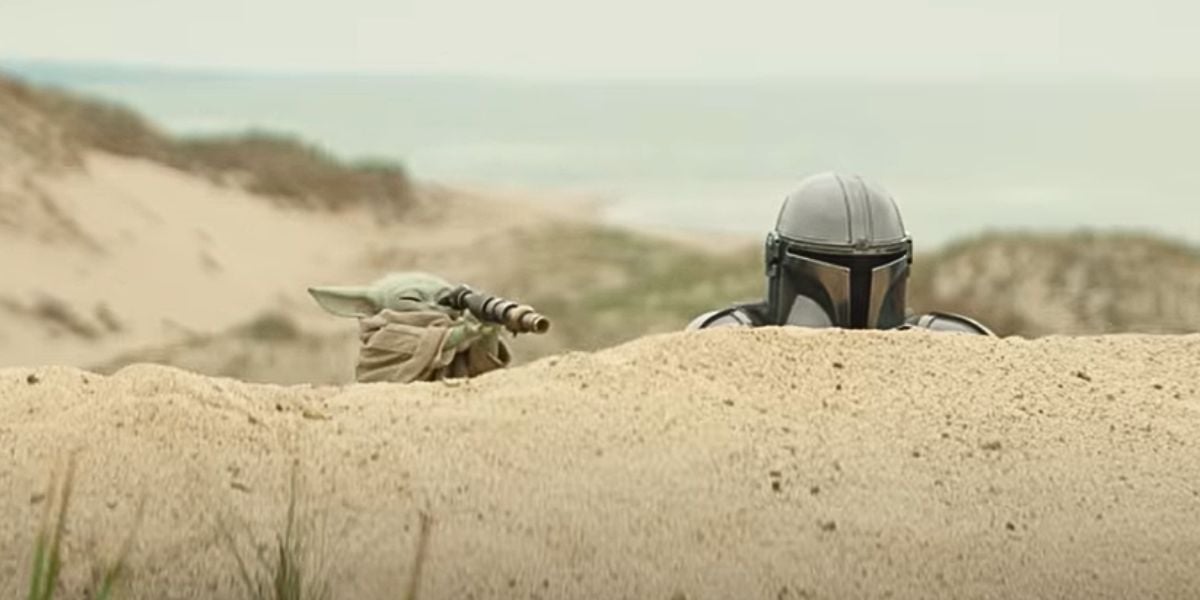
Rotta’s involvement opens fascinating narrative possibilities, particularly given his family legacy. First introduced as an infant in 2008’s Star Wars: The Clone Wars, Rotta now appears as a fully grown successor to Jabba’s criminal empire.
His position within the Hutt syndicate could place him at the center of power struggles in the post-Empire galaxy, where criminal organizations are jockeying for control while the New Republic struggles to establish order. Din’s recruitment to work for the good guys might involve protecting, extracting, or even allying with someone like Rotta despite his criminal connections.
The gladiator arena sequences teased in early footage suggest Rotta’s role extends well beyond a cameo or brief appearance. These extended action sequences apparently showcase Rotta in combat situations, positioning him as an active participant in the film’s conflict rather than a background figure.
Whether he’s fighting for survival, entertainment, or as part of a larger scheme remains to be seen, but his prominence in these scenes indicates substantial screen time and character development.

Fan theories have naturally proliferated about what mission might unite Din and Rotta. Some speculate about a high-risk heist targeting Hutt syndicate assets, with Rotta serving as either an inside ally or a reluctant participant. Others wonder if Rotta is being hunted by rival criminal organizations or Imperial remnants, requiring Din’s protection as part of his new role working for the New Republic.
There’s also the possibility that Rotta represents something more complex—perhaps a Hutt attempting to distance himself from his family’s criminal legacy, seeking legitimacy in the new galactic order.
The most intriguing aspect of this dynamic involves what it means for Grogu’s arc. If Din spends much of the film alongside Rotta, Grogu must be pursuing his own journey, possibly the separate adventure hinted at by his discovery of the Force-amplifying artifact.
This structure would allow both characters to undergo significant development independently before reuniting, potentially transformed by their experiences. Grogu might emerge more powerful and capable, while Din’s time with Rotta could force him to confront complicated moral questions about justice, loyalty, and what working for the good guys actually means in a galaxy where good and evil aren’t always clearly defined.

This narrative choice carries risks and opportunities in equal measure. Fans deeply invested in the Din-Grogu relationship might feel shortchanged if the film extensively separates them, viewing Rotta’s presence as an unwelcome intrusion into the dynamic they came to see. Others might welcome the expanded scope, appreciating that both characters receive room to grow beyond their established patterns.
The success of this approach will ultimately depend on execution—whether the film earns these separations through compelling storytelling or whether they feel like arbitrary choices that undermine the franchise’s emotional core.
A Transformative Chapter
The Mandalorian and Grogu arrives at a pivotal moment for Star Wars‘ theatrical future, representing Lucasfilm’s first cinema release in seven years while simultaneously bridging the franchise’s streaming success with renewed big-screen ambitions.
The film’s willingness to transform both its title characters—Din abandoning his bounty hunter neutrality, Grogu discovering power amplification, their dynamic potentially shifting through extended separation—signals that this isn’t simply a victory lap for a popular series but rather a bold reimagining of what these characters can be.

Whether audiences embrace these changes or long for the original vision that made The Mandalorian a phenomenon remains the central question as May 2026 approaches.
The film promises something different from what came before, trading the series’ gritty, morally ambiguous mercenary for a hero fighting for the good guys, its vulnerable Force-sensitive child for an empowered apprentice, and its central father-child dynamic for a potentially more complex ensemble adventure. These aren’t minor adjustments—they’re fundamental transformations that will define how this chapter fits within Star Wars‘ broader mythology.
For some fans, this evolution represents a natural progression, arguing that characters should grow and change rather than remain static. Din’s journey from isolated bounty hunter to protective father to committed defender of the New Republic traces a clear arc of someone learning to care about something larger than himself.
Grogu’s power increase reflects his development as a Force user, moving beyond the limitations of childhood toward greater capability and independence.

Others worry that these changes abandon what made The Mandalorian distinctive in the first place. The series succeeded precisely because it wasn’t another story about heroes and villains clearly marked by the light and dark sides of the Force.
It explored the galaxy’s gray areas through a protagonist who operated according to personal codes rather than galactic conflicts, creating space for nuanced storytelling that felt fresh within Star Wars‘ established framework.
Both perspectives hold validity, and The Mandalorian and Grogu will ultimately be judged on whether it successfully balances evolution with the emotional continuity that made audiences care about these characters.
Can a film about a Mandalorian working for the New Republic retain the edge that made the bounty hunter compelling? Can an empowered Grogu maintain his vulnerability and charm? Can Rotta the Hutt prove interesting enough to justify extensive screen time alongside or instead of the central duo?

The answers will arrive when theaters light up on May 22, 2026, revealing whether Lucasfilm’s gamble on theatrical transformation pays off or whether fans will wish they’d simply gotten another season of the show they fell in love with.
Either way, Star Wars is making a statement about where the franchise goes next—and Din Djarin and Grogu are leading that charge into uncertain territory, their futures as transformed as the medium delivering their next adventure.
The Mandalorian and Grogu stars Pedro Pascal as Din Djarin, Sigourney Weaver as Admiral Ward, Jeremy Allen White as Rotta the Hutt, Jonny Coyne as an Imperial Warlord, Dave Filoni as Trapper Wolf, and Steven Blum as Garazeb “Zeb” Orrelios.
How do you feel about all these departures from The Mandalorian TV series? Do you think it is a good sign, or too much of a change? Let Inside the Magic know in the comments down below!