 2
2
 Credit: Netflix
 The internet never forgets, but streaming services can at least try to make people forget. When a continuity error goes viral and threatens to overshadow the actual content of a show, platforms have the unique ability to retroactively fix mistakes in ways that were impossible during the era of physical media and broadcast television.
HBO famously demonstrated this capability when they digitally removed the Starbucks-style coffee cup from Game of Thrones Season 8 after the blunder became international news and spawned countless memes.
The edit didn’t erase the damage to the show’s reputation or make the screenshots disappear from the internet, but it at least ensured that future viewers wouldn’t encounter the jarring anachronism that had distracted millions from the actual story. Netflix now finds itself following the same playbook.
After eagle-eyed Stranger Things fans spotted an Under Armour logo prominently displayed on Holly Wheeler’s sleeve during Episode 7 of Season 5, the mistake quickly became one of the most talked-about aspects of Volume 2.
Social media erupted with comparisons to the Game of Thrones coffee cup, with fans questioning how such an obvious error made it through over a year of post-production on a show that prides itself on meticulous period accuracy.
The logo appeared during a crucial scene where Holly escapes from Vecna’s lair in the Abyss, and its presence was impossible to miss once viewers knew to look for it. The problem was simple but glaring: Under Armour wasn’t founded until 1996, while Stranger Things Season 5 takes place in 1987.
Holly was somehow wearing athletic gear from a company that wouldn’t exist for another nine years, a continuity error that completely broke immersion for viewers who noticed.
The backlash was swift and intense, with the mistake threatening to become the defining conversation around Volume 2 rather than the actual plot developments and character arcs the Duffer Brothers had spent years crafting.
Netflix Issues Updated Version
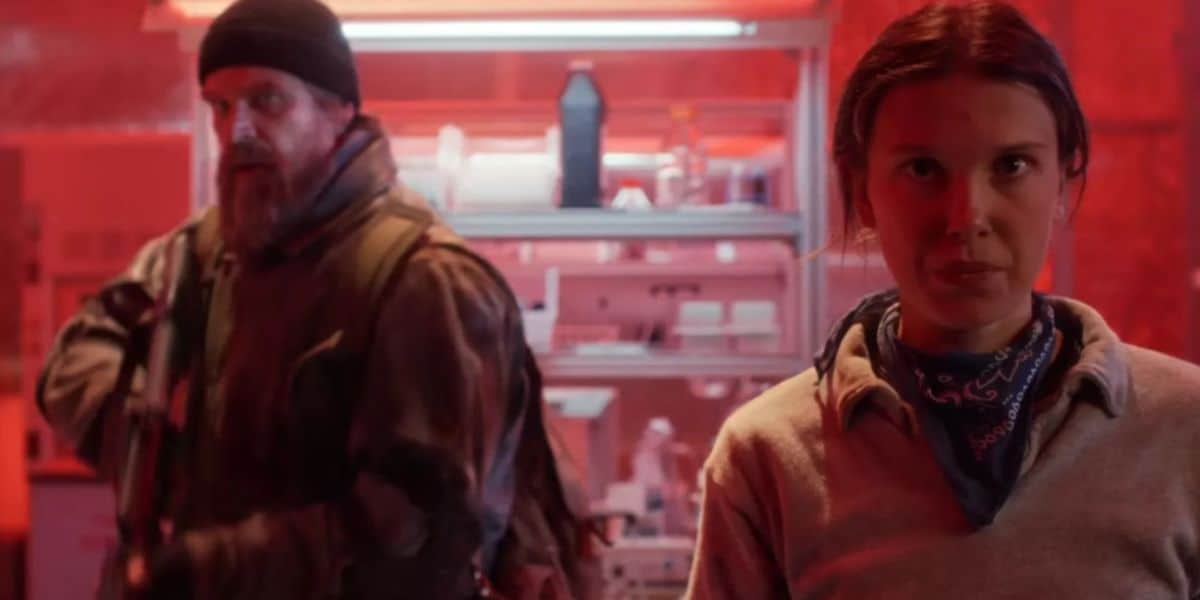
Following days of viral social media posts and widespread coverage of the continuity error, Netflix has now replaced the original Episode 7 with an edited version that digitally removes the Under Armour logo from Holly Wheeler’s clothing. The streaming giant made no official announcement about the change, instead quietly swapping out the files available to subscribers.
Viewers who watch Episode 7 now will see Holly’s escape scene without the anachronistic branding that caused such controversy. The edit appears seamless, with no obvious signs of digital manipulation visible to casual viewers.
Netflix’s post-production team successfully removed the logo without creating new visual artifacts or drawing attention to the area where the branding previously appeared.
This silent correction follows the same strategy HBO employed with the Game of Thrones coffee cup. Rather than issuing press releases or public statements acknowledging the error, streaming platforms prefer to simply fix the problem and move on, hoping that corrected versions will eventually replace the viral screenshots in public consciousness.
☆ ru | nɹ ☆ ST5 SPOILERS (@ruthbaderog) took to X and confirmed it was removed, while also sharing the original mistake, “I just went back and rewatch and it’s been edited out.”
I just went back and rewatch and it’s been edited out https://t.co/jKnPyktFZx
— ☆ ru | nɹ ☆ ST5 SPOILERS (@ruthbaderog) December 29, 2025
The Original Error and Fan Reaction

The Under Armour logo first gained attention when X user @SovereignTrades posted a screenshot clearly showing the branding on Holly’s sleeve as she freed herself from Vecna’s prison. The image quickly went viral, with fans expressing disbelief that such an obvious anachronism had made it through Netflix’s extensive post-production process.
I love how Holly in Stranger Things is rocking @UnderArmour founded in 1996 pic.twitter.com/41uNpfYFXd
— Sovereign💎 (@SovereignTrades) December 26, 2025
User @scar1etbegonias joked that the Under Armour logo was “more unsettling than Vecna” and wondered if Holly had somehow “tore through the fabric of space and time and got into the future.”
Writer Julian Cannon expressed frustration about the extended post-production timeline, tweeting that it was “unbelievable” that this error survived over a year of editing work. (Cannon mistakenly attributed the Under Armour clothing to Max Mayfield rather than Holly Wheeler, though his broader point about quality control remained valid.)
The comparisons to Game of Thrones came immediately. User @DanDellaCroce declared that “stranger things is on the same path” as Game of Thrones Season 8, while @packalanche noted the irony that Stranger Things has historically excelled at product placement, making this particular oversight especially puzzling.
Why The Error Mattered
Stranger Things has built its reputation partly on meticulous attention to 1980s period details. From the music selections to the technology featured on screen to the fashion choices characters make, the show has consistently demonstrated commitment to authenticity that helps transport viewers to mid-1980s Indiana.
This dedication to period accuracy has been one of the show’s defining characteristics and a major factor in its success.
When such an obvious anachronism appears during a crucial emotional scene, it breaks the carefully constructed illusion the show has spent five seasons building. Viewers who notice the error are instantly pulled out of the story, reminded that they’re watching actors on a set rather than experiencing events in 1987 Hawkins.
The error also raised questions about Netflix’s quality control processes. The Duffer Brothers repeatedly emphasized how much time they needed for post-production on Season 5, spending over a year on editing and visual effects work.
That extended timeline created expectations that every detail would receive scrutiny, making it especially baffling when something as prominent as a modern brand logo appeared in the final cut.
Not Stranger Things’ First Anachronism
This wasn’t even the first time Stranger Things had featured anachronistic products. Season 3, set in summer 1985, showed Mike Wheeler pouring M&Ms into Eleven’s hand, one of which was red. Red M&Ms had been discontinued in 1976 and didn’t return until 1987, making their appearance historically inaccurate.
However, that error was far more subtle. Catching a single red M&M required freeze-framing and close examination, and most viewers never noticed it at all. The Under Armour logo, by contrast, was prominently displayed during an extended scene, making it considerably harder to miss once fans started looking for continuity issues.
The M&M mistake also occurred during Season 3 when the show was riding high on critical acclaim. Season 5 arrives amid more mixed reactions, particularly regarding Volume 2’s pacing problems and narrative choices, making fans more inclined to scrutinize details and less forgiving of errors.
The Broader Context of Volume 2 Reception
While the Under Armour logo captured significant attention, it represented a relatively minor issue compared to substantive criticisms of Volume 2’s storytelling. Many fans expressed frustration with pacing problems, excessive exposition, and an overabundance of emotional conversations that interrupt action sequences.
Will Byers’ arc particularly disappointed viewers who expected him to finally embrace his powers after years of being victimized. Instead, Volume 2 quickly depowered him after one impressive moment in Volume 1, relegating him to tearful guilt-ridden conversations rather than active participation in fighting Vecna.
The expanded cast has created screen time challenges, with Holly Wheeler somehow becoming a central protagonist while Eleven, the show’s traditional lead, feels sidelined with reduced abilities.
Critics pointed to scenes like Max’s escape from Vecna’s mind realm, where she stops at the portal for an extended conversation with Holly rather than simply fleeing, as examples of unnecessary dialogue slowing the narrative.
The Power of Retroactive Editing
Netflix’s ability to quietly fix the Under Armour error demonstrates both the advantages and limitations of streaming distribution. Unlike broadcast television or physical media, streaming platforms can update content after release, correcting mistakes that would have been permanent in earlier eras.
However, this capability doesn’t erase the original error from public memory. Screenshots and videos of the Under Armour logo have spread across social media and will remain accessible indefinitely.
The mistake has already been documented in countless articles and discussed in numerous online forums. Future viewers may watch the corrected version, but the error has already secured its place in television history.
The silent correction also raises questions about transparency. Should Netflix have acknowledged the fix publicly, or is quiet editing the appropriate response? Different viewers will have different opinions on whether streaming services should announce when they alter previously released content.
What This Means For Future Productions
The Under Armour incident serves as a reminder that even extensive post-production timelines and substantial budgets don’t guarantee perfection. Despite over a year of editing work and Netflix’s significant investment in Stranger Things’ final season, an obvious continuity error still made it to release.
For future productions, the lesson may be that period pieces require additional layers of review specifically focused on anachronisms. Having experts or dedicated continuity teams examine every frame for time-period accuracy could catch errors that general editors and visual effects artists might miss while focusing on other aspects of production.
The incident also demonstrates that streaming platforms now treat continuity errors as fixable problems rather than permanent mistakes. When an error generates significant negative attention, platforms have established that they’re willing to invest resources in retroactive corrections, even if those fixes can’t undo the reputational damage already done.