 10
10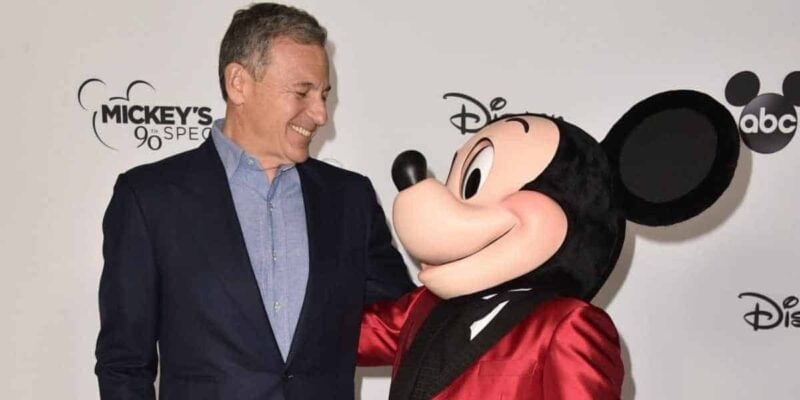
 Credit: Disney
For Disney, backlash isn’t new. But this time, the tension feels sharper—and far more personal.
The reaction following Disney’s newly revealed deal with OpenAI hasn’t stayed confined to comment sections or fleeting outrage cycles. It’s coming from within the creative community that helped build Disney’s legacy in the first place.
Animators, voice actors, and show creators aren’t just questioning the move—they’re openly warning fans away. And that has put Disney in an unusually uncomfortable position, one where loyalty can no longer be taken for granted.

At the center of the controversy is a three-year agreement that allows OpenAI’s Sora platform to generate short-form videos using Disney-owned characters, with select fan-created content eventually streaming on Disney+. On paper, it reads like a bold step into the future. In reality, it has landed as something far more emotional—and far more divisive.
The Reaction Disney Didn’t Control
Almost immediately after the deal became public, the pushback began. Some of it was predictable. Concerns about artificial intelligence replacing artists have been simmering for years. What surprised many was how direct—and personal—the criticism became.
Dana Terrace, creator of The Owl House (2020), publicly called for a Disney+ boycott, encouraging fans to unsubscribe rather than support what she sees as an exploitative shift toward generative AI. Her response wasn’t framed as a rejection of technology itself, but as a protest against what she believes is an effort to remove human creators from the process altogether.
“If you pay us we’ll let you make your own content slop! That we will own!”
YOU CAN DRAW AND WRITE AND POST YOUR OWN [censored] FOR FREE. Bob Iger and his ilk are [censored] ghouls.Unsubscribe from Disney+. Pirate Owl House. I don’t care. [censored] gen AI.”
That framing matters. This debate isn’t just about innovation versus tradition. It’s about trust—between Disney and the artists who once believed the company stood firmly on the side of human creativity.
Related: Bob Iger Confirms “Classic” Walt Disney World Will No Longer Exist
A Divide Among Creators
Not all reactions have landed in the same place, and that split has only deepened the uncertainty surrounding Disney’s move.
Former Disney animator Aaron Blaise, who worked on classics like Beauty and the Beast (1991) and The Lion King(1994), acknowledged feeling unsettled by the idea that characters he helped bring to life could now be endlessly manipulated by AI tools. At the same time, he suggested Disney may have felt cornered, choosing to participate in the AI space rather than lose control of how its characters are used.
“It degrades it for the filmmakers,” he told Deadline.
That contrast—fear versus resignation—runs through much of the conversation. Some see the deal as a betrayal of Disney’s creative roots. Others see it as damage control in an industry that’s already changing faster than anyone can slow down. What’s missing is a shared sense of direction, and for a company built on unified storytelling, that absence is noticeable.

Why the Boycott Threat Feels Different
Calls to boycott Disney products aren’t unusual. They often flare up, trend briefly, and then fade. This moment feels different because the loudest voices aren’t outside critics—they’re insiders and alumni whose careers were shaped inside Disney’s walls.
Voice actors and creatives have echoed similar concerns, describing generative AI as dismissive of the craft and disrespectful to the years spent learning how to tell stories through animation and performance. Several have warned that moves like this could push audiences and artists away from major studios altogether, accelerating a shift toward independent projects instead.
Even more troubling for Disney is the suggestion that morale inside the company is already fragile. Some creators have claimed that development pipelines are shrinking and that fear about long-term job security is growing. In that context, the OpenAI deal doesn’t feel like an isolated experiment—it feels like confirmation of a deeper shift.
Disney’s Careful Messaging
Disney executives have emphasized responsible use of AI and a stated commitment to protecting creators, framing the partnership as an expansion of storytelling rather than a replacement for it. Bob Iger has spoken about using AI to make Disney+ a broader hub for engagement, blending entertainment with interactivity and personalization.
For critics, though, those assurances haven’t eased the anxiety. The concern isn’t just what Disney plans to do today—it’s what this decision unlocks tomorrow. Once audiences grow accustomed to instantly generated content, will patience for slower, more deliberate, human-made art disappear?
That question remains unanswered.

A Future Disney Can’t Fully Control
Disney is betting that fans will embrace the novelty, that creativity placed directly in users’ hands will feel empowering rather than hollow. So far, the reaction suggests something more complicated—a growing unease rooted in identity, not technology.
For a company whose reputation has long rested on heart, craftsmanship, and emotional connection, the risk isn’t merely a short-term boycott. It’s a gradual fracture in the relationship between Disney and the creatives who believed in its soul.