 8
8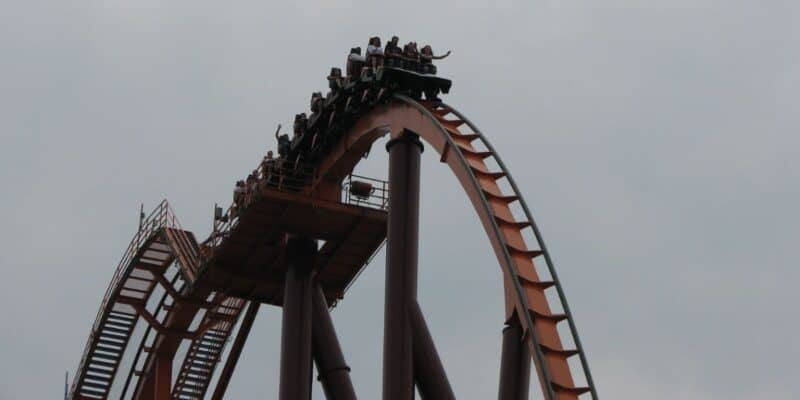
 Credit: Jeremy Thompson, Flickr
Earlier this week, Six Flags announced that John Reilly, former CEO of Palace Entertainment and COO of SeaWorld Parks and Entertainment, would be taking over as President and CEO of the company. Reilly’s appointment, which takes effect on December 8, comes at a time when the theme park giant is struggling after a disappointing year.
During its first-quarter earnings report this year, Six Flags Entertainment, North America’s largest theme park company, informed investors that attendance declined by 17 percent. At the time, CEO Richard Zimmerman told investors that inclement weather was to blame for the slow start to the season, as rainstorms nationwide slowed guests’ visits to the parks.
During the second-quarter earnings call, Zimmerman informed investors that Six Flags experienced a $100 million revenue decline, a 9% decline in attendance, and an 8% decline in season pass sales. Before announcing the numbers, Zimmerman told investors he would step down as CEO as soon as the Board could find a replacement.

The third quarter did not bring any relief for Six Flags. Net revenue decreased by $31 million compared to the third quarter of 2024, and per capita spending was $59.08, representing a 4% year-over-year decline.
Now, with a new CEO in place, Six Flags’ parks across the country are bracing for closures and massive layoffs as he seeks to get the company back on track. However, there is already evidence that Six Flags is planning to close or sell some, if not many, of its parks.

After Six Flags closed Six Flags America outside Washington, D.C., on November 2, Brian Witherow, executive VP and CFO of Six Flags, told investors that the company was planning on either closing or selling off more of its parks.
“Getting the portfolio smaller and more nimble is a priority,” Witherow said. “So we’re going to look at the parks where our returns are the greatest, where the opportunities for growth are the highest, and we’re going to focus on those parks, and the other parks we’ll look to monetize and use those proceeds to reduce debt.”
Witherow said that the company is in the process of identifying what he called “core” and “non-core” parks, and the company would “divest itself” of those parks that it deemed to be “non-core.” While Witherow did not identify the parks the company would be selling, based on those that are adding new attractions, it’s easy to surmise which ones the company deems to be “core.”
At the latest investor meeting, Zimmerman informed investors that the “largest and most established parks” in the portfolio account for 70% of the revenue. He did not identify which parks represent the “largest and most established,” but that list undoubtedly includes Knott’s Berry Farm in California and Cedar Point in Ohio.

Now, Reilly will have to decide which of the Six Flags parks will close and which are profitable enough to stay open. Either way, more park closures are coming to Six Flags soon.
Which parks do you think Six Flags will close, and which ones do you think will stay open? Let us know in the comments.